

 By
By TL;DR
A 3 day full body workout plan is one of the most effective structures for beginners not a stepping stone to something more serious, but a genuinely well matched approach for someone whose body is still adapting to training. Three sessions a week gives each muscle group enough frequency to improve while leaving enough recovery time for that improvement to actually happen. The plan below covers all the major movement patterns in each session, includes real sets and reps, and is built around progressive overload the only mechanism that produces long term progress. Follow it consistently for eight to twelve weeks and most people will see a meaningful shift in both strength and how movement feels.
If you do nothing else, just follow this:
Train 3 days a week
Do 3 sets of each exercise
Stay in the 8–12 rep range
Add weight only when all reps feel controlled
Focus on proper form before increasing weight
Why Three Days Works for Beginners
Three full body sessions a week is not a beginner compromise it is genuinely one of the more effective ways to train when you are starting out. When you are new to lifting, the limiting factor is your nervous system learning to coordinate movement, not your muscles. Frequency helps with that. More sessions means more practice, faster neural adaptation, and better early progress.
Recovery is the other side of it. Rest days give your body time to rebuild tissue slightly stronger than before. Training without enough recovery interrupts that process. A Monday, Wednesday, Friday pattern leaves roughly 48 hours between sessions, which is about what muscles need. There is also a practical case for three days it is sustainable in a way that five or six sessions often is not, especially before the habit has become automatic.
How the Plan Is Structured
Each session covers the same movement patterns: a push, a pull, a squat or hinge, and core work. If you miss a session, you have not skipped an entire muscle group for the week everything gets trained at every session.
The exercises are compound movements, meaning multiple joints and muscle groups work simultaneously. Rep ranges sit in the 8–12 zone, which research tends to show is effective for building both strength and muscle. Sets are kept to three per exercise enough to drive adaptation without making sessions unnecessarily long. Rest 60 seconds between sets unless otherwise noted.
Warm up before each session. Five minutes of light cardio followed by bodyweight versions of the movements you are about to do is enough. Skipping it raises injury risk and makes the working sets feel harder than they need to.
The Plan
Three days a week. At least one full rest day between sessions. Each session runs roughly 45 to 55 minutes including warm up.
Day 1 Full Body A
Goblet Squat
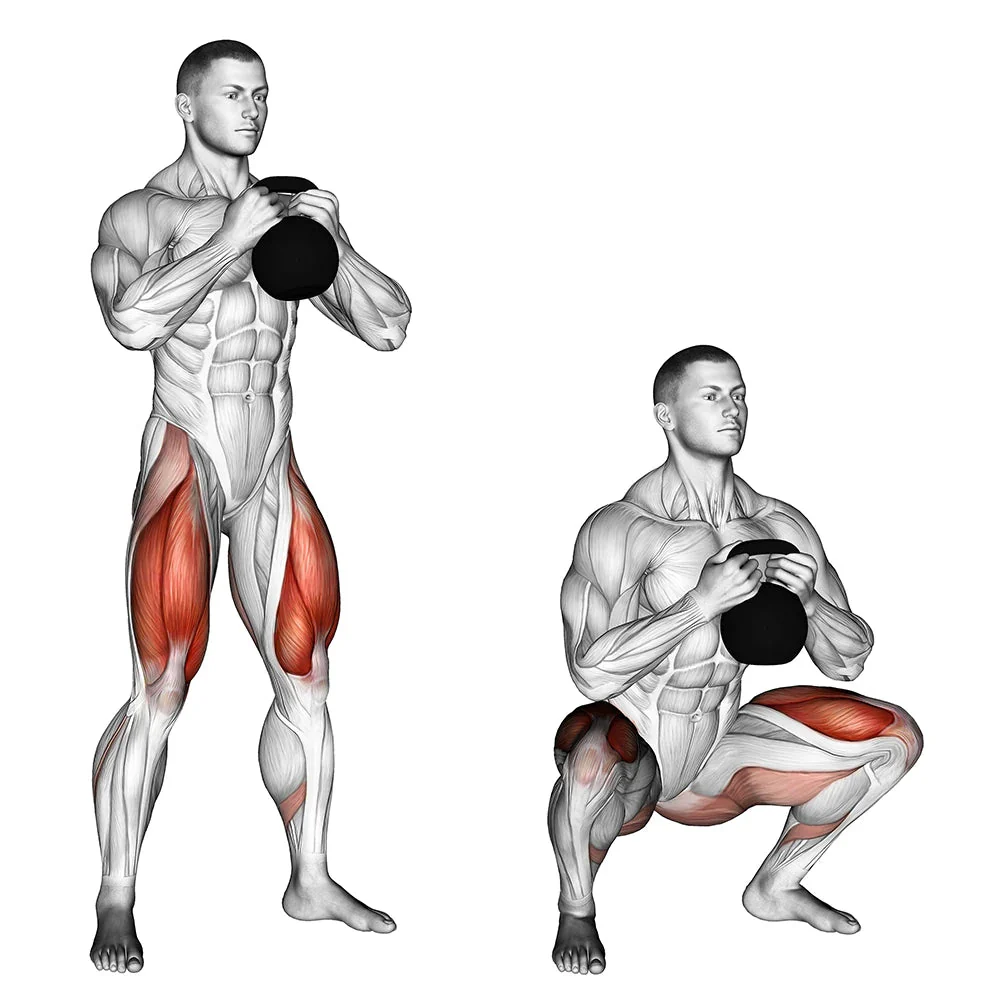
Sets: 3 | Reps: 10–12 | Rest: 60 sec
Hold a dumbbell or kettlebell at your chest, feet shoulder width apart with toes slightly out. Push your hips back and down, keeping your chest up and your heels grounded throughout. Aim to get your thighs close to parallel with the floor. Drive through your feet to stand back up. The goblet position helps keep your torso upright, which makes it one of the better squat variations to learn form on before moving to heavier alternatives.
Dumbbell Bench Press
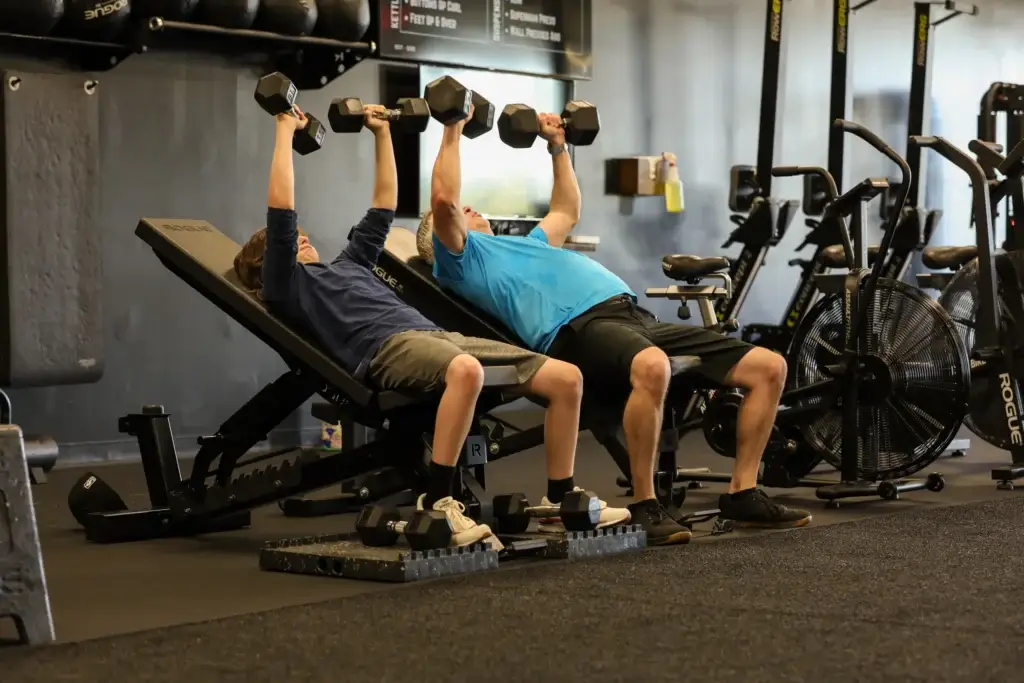
Sets: 3 | Reps: 10–12 | Rest: 60 sec
Lie on a bench with a dumbbell in each hand at chest height, elbows at roughly 45 degrees from your torso not flared wide. Press the dumbbells up and slightly in until your arms are extended, then lower with control. The most common mistake is letting the elbows flare out to 90 degrees, which shifts stress onto the shoulder joint rather than the chest. Keep the movement controlled on the way down.
Dumbbell Romanian Deadlift

Sets: 3 | Reps: 10–12 | Rest: 60 sec
Stand holding dumbbells in front of your thighs. Push your hips back think of it like trying to close a car door behind you with your backside while keeping a slight bend in your knees and your back flat. Lower the dumbbells along your legs until you feel a stretch in your hamstrings, then drive your hips forward to return to standing. The movement comes from the hip hinge, not from bending your lower back. If your back is rounding, reduce the range of motion until your flexibility improves.
Seated Cable Row (or Dumbbell Row)
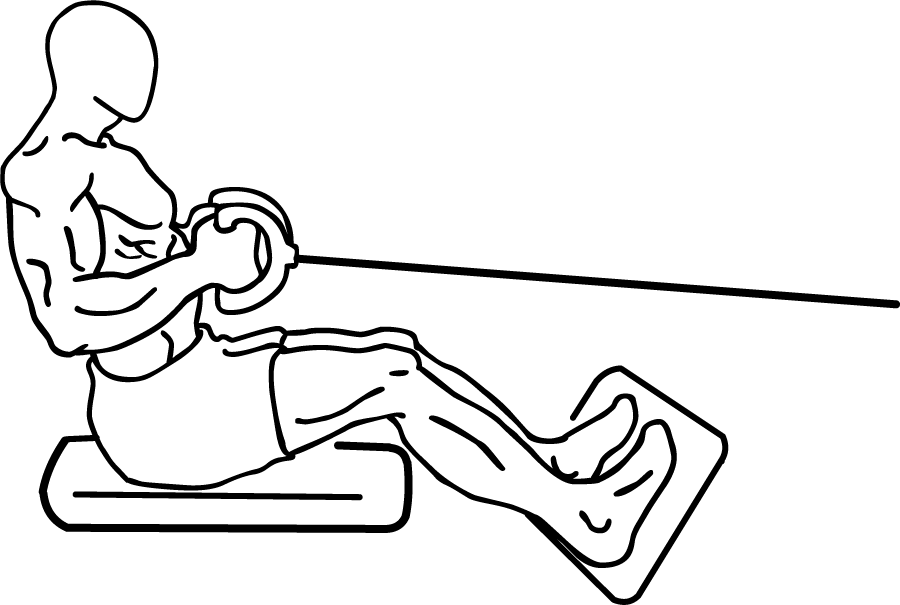
Sets: 3 | Reps: 10–12 | Rest: 60 sec
If you have cable access, sit at the row station and pull the handle toward your lower chest, driving your elbows back and squeezing your shoulder blades together at the end of the movement. If you are using dumbbells, brace one hand on a bench and row the dumbbell up toward your hip, keeping your elbow close to your body. Pulling movements are essential skipping them creates an imbalance with the pressing work, particularly across the upper back.
Plank Hold
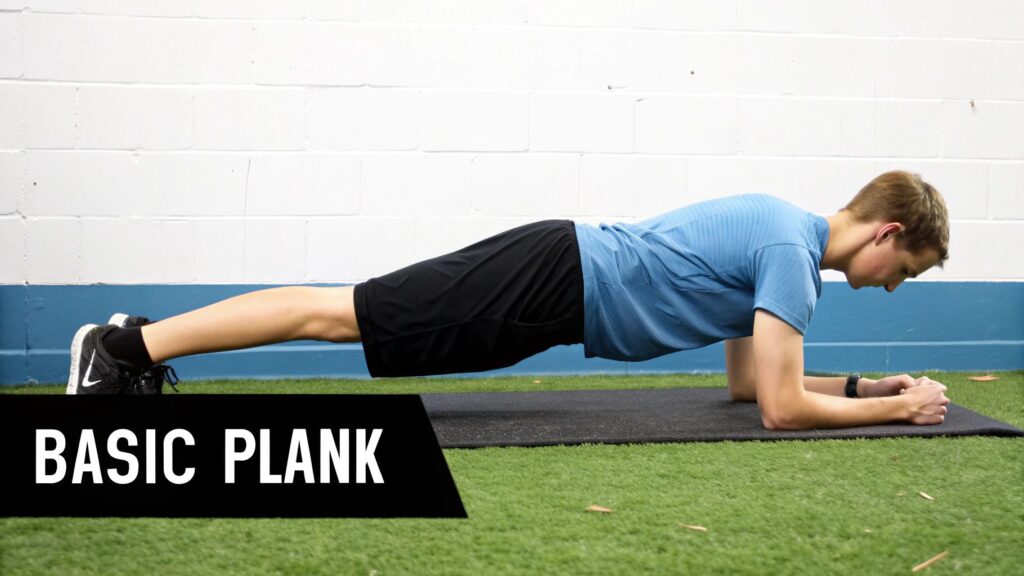
Sets: 3 | Hold: 20–30 sec | Rest: 45 sec
Forearms on the floor, elbows under your shoulders, body in a straight line from head to heels. Squeeze your glutes, brace your abs, and keep your hips level. Twenty solid seconds with full tension throughout is more useful than a sixty second hold where the form falls apart halfway through. If your hips are sagging or rising, the set loses most of its value even if your arms have not given out yet.
Day 2 Full Body B
Leg Press (or Bodyweight Squat)
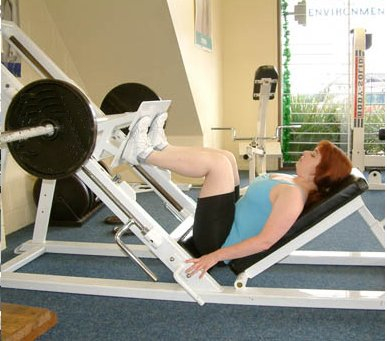
Sets: 3 | Reps: 12–15 | Rest: 60 sec
If you have access to a leg press machine, use a foot position roughly shoulder width apart and press through your full foot rather than the balls of your feet. Lower until your knees are at roughly 90 degrees. If you are training at home, bodyweight squats with a slow tempo three seconds down, one second pause at the bottom, drive back up cover the same pattern with less load and work well as a substitute.
Dumbbell Overhead Press
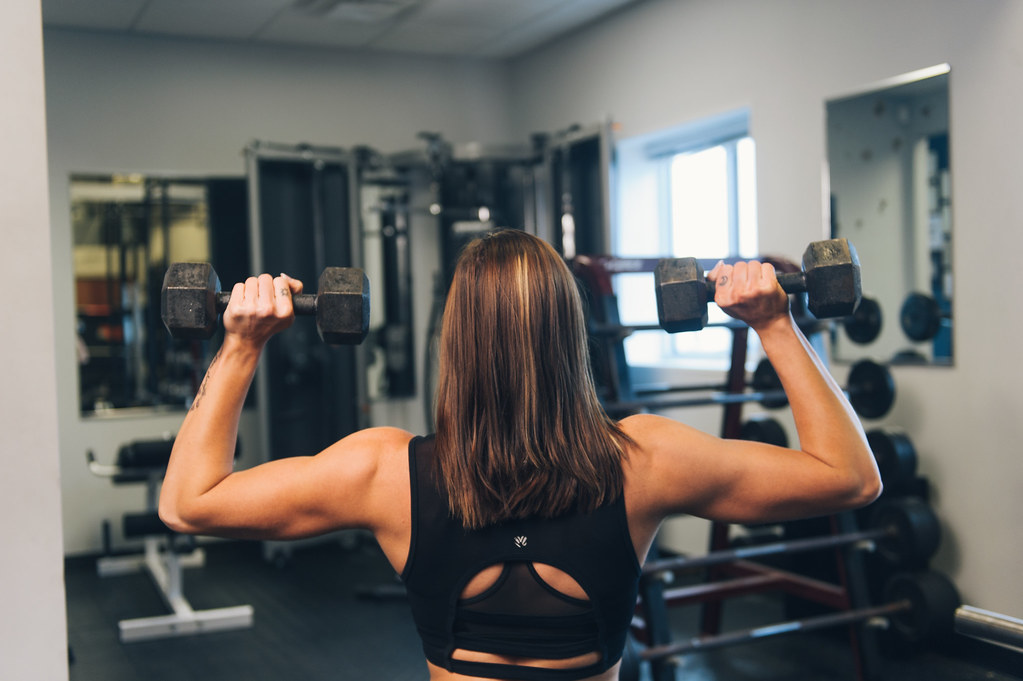
Sets: 3 | Reps: 10–12 | Rest: 60 sec
Sit or stand holding dumbbells at shoulder height, palms facing forward. Press them up and slightly in until your arms are fully extended overhead, then lower with control. Keep your core braced throughout beginners often arch their lower back excessively when pressing overhead, which puts unnecessary stress on the lumbar spine. If you notice this happening, reduce the weight before worrying about the reps.
Hip Thrust (or Glute Bridge)
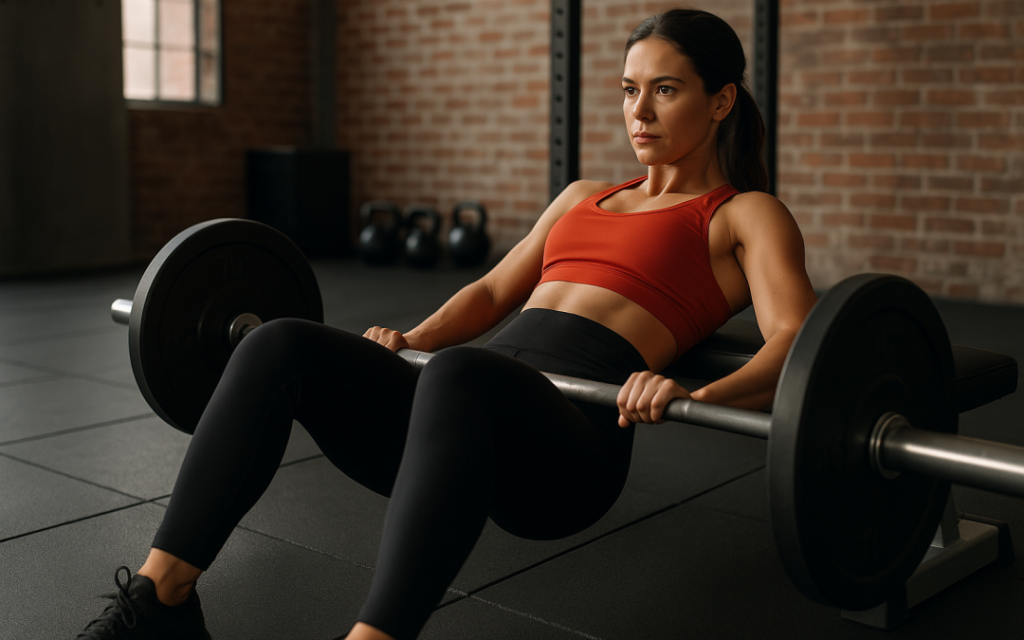
Sets: 3 | Reps: 12–15 | Rest: 60 sec
For a hip thrust, rest your upper back against a bench with your feet flat on the floor and drive your hips upward, squeezing your glutes at the top. For a glute bridge, lie on your back and perform the same movement from the floor. Hold for a second at the top and actually squeeze do not just reach the position and drop back down. If you are feeling this mostly in your hamstrings rather than your glutes, move your feet slightly closer to your hips.
Lat Pulldown (or Assisted Pull Up)
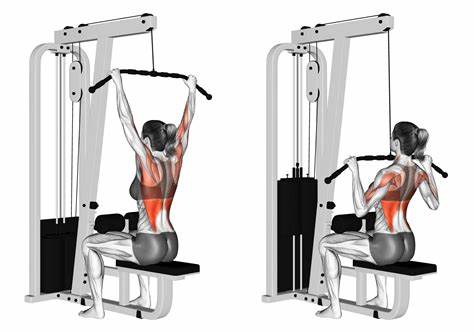
Sets: 3 | Reps: 10–12 | Rest: 60 sec
At the lat pulldown machine, grip the bar just outside shoulder width, lean back slightly, and pull the bar to your upper chest by driving your elbows down and back. Avoid pulling the bar behind your neck it adds stress to the cervical spine with no meaningful benefit. If you are working toward pull ups, use the assisted pull up machine or a resistance band looped over the bar to reduce the load.
Dead Bug
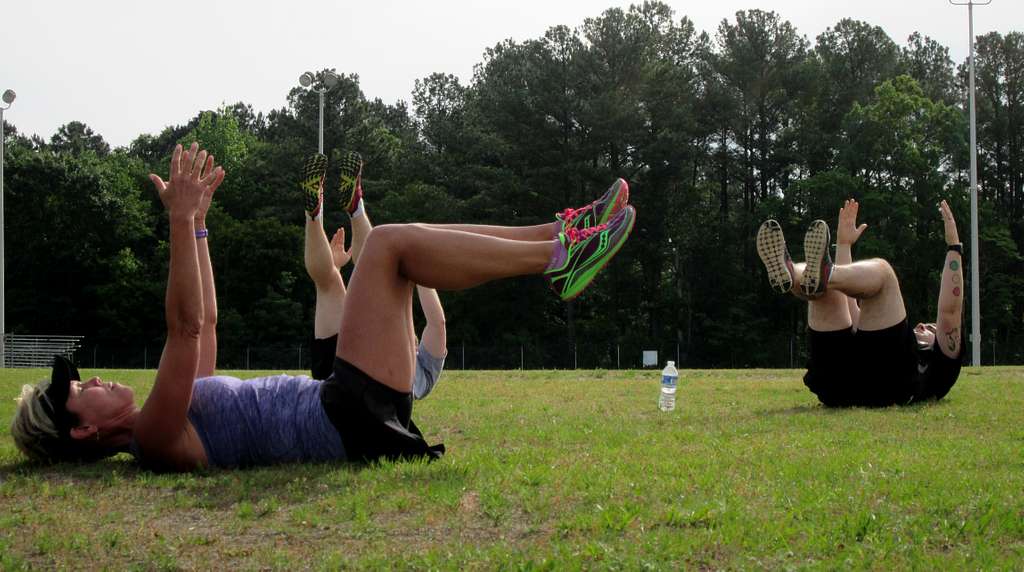
Sets: 3 | Reps: 8 per side | Rest: 45 sec
Lie on your back with your arms pointing to the ceiling and your knees bent at 90 degrees, shins parallel to the floor. Slowly lower your right arm behind your head and your left leg toward the floor at the same time, keeping your lower back pressed against the floor throughout. Return to start and repeat on the other side. The goal is control, not speed. If your lower back lifts off the floor at any point, reduce the range of motion rather than pushing through.
Day 3 Full Body C
Dumbbell Split Squat
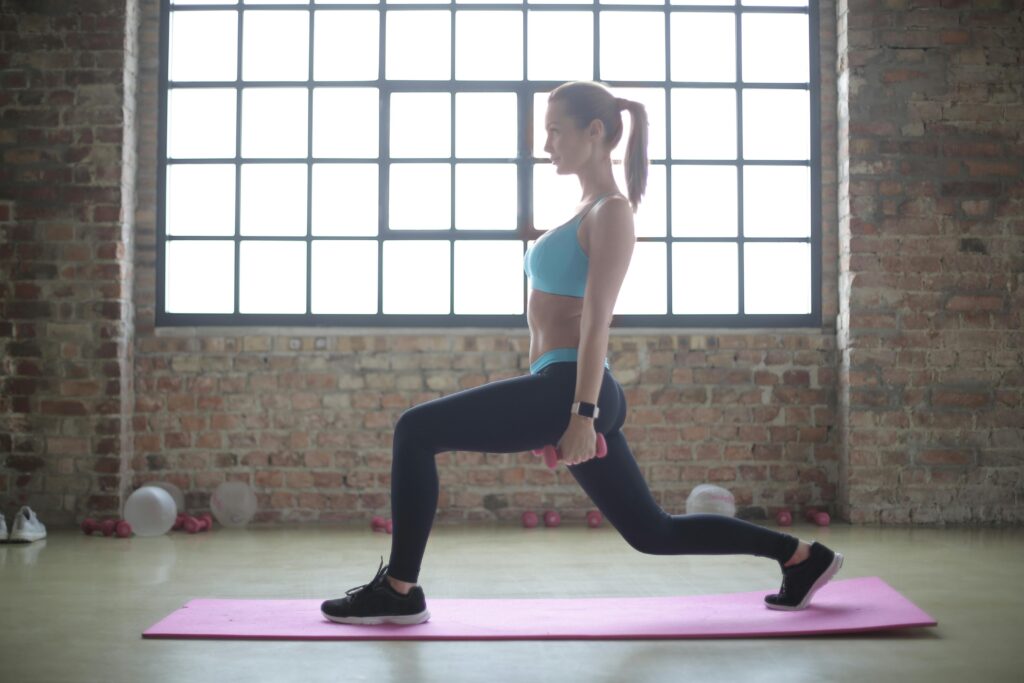
Sets: 3 | Reps: 10 per leg | Rest: 60 sec
Stand in a staggered stance with one foot forward and one back, holding dumbbells at your sides. Lower your back knee toward the floor, keeping your front shin roughly vertical and your torso upright. Drive through your front foot to return to the start position. This is harder than it looks, especially for people with limited hip flexibility. Use lighter weights than you expect to need and focus on keeping your front knee tracking over your foot rather than caving inward.
Push Up (or Incline Push Up)
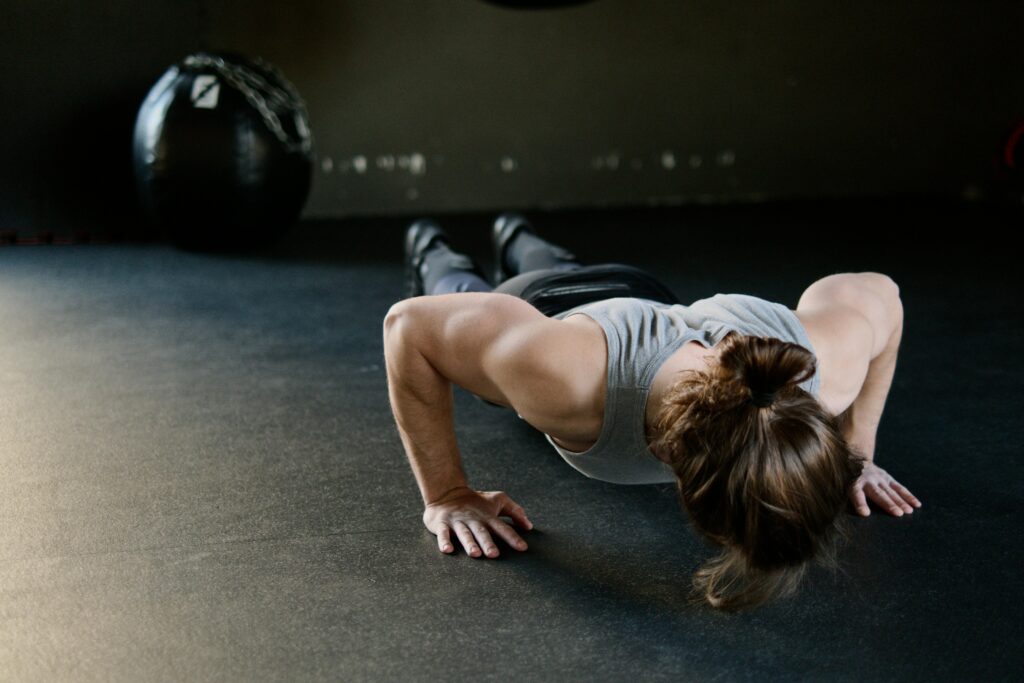
Sets: 3 | Reps: 8–12 | Rest: 60 sec
High plank position, hands slightly wider than shoulder width, body in a straight line. Lower your chest toward the floor with your elbows at roughly 45 degrees from your torso not flared wide. Press back up. If standard push ups are not manageable yet, elevating your hands on a surface is the better modification. It preserves the movement pattern more consistently than knee push ups and the carryover to the standard version is more direct. The straight body line is what most people lose first hips sagging or piking are both signs that your core is not maintaining tension.
Dumbbell Deadlift
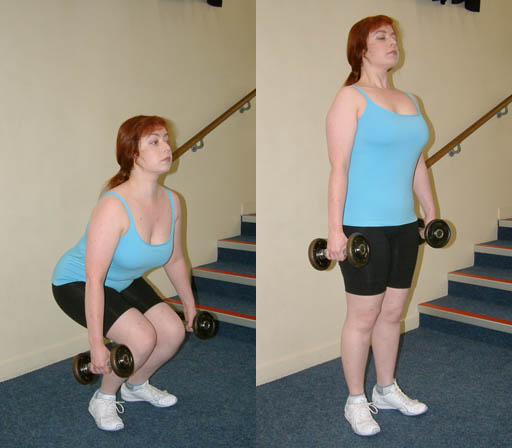
Sets: 3 | Reps: 10–12 | Rest: 60 sec
Stand with dumbbells in front of your legs. Hinge at the hips, push them back, and lower the dumbbells toward the floor while keeping your back flat and your chest up. Drive your hips forward to return to standing. This covers similar ground to the Romanian deadlift from Day 1 the difference is that you lower the dumbbells closer to the floor rather than stopping mid shin. Keep the dumbbells close to your legs throughout the movement.
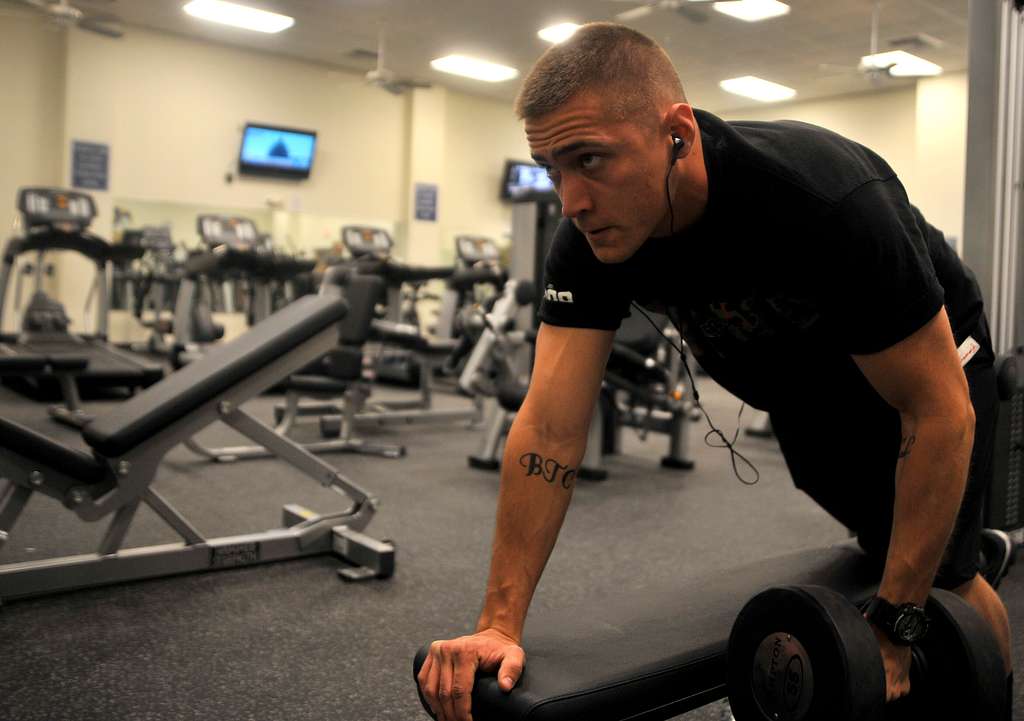
Single Arm Dumbbell Row
Sets: 3 | Reps: 10 per side | Rest: 60 sec
Place one hand and the same side knee on a bench for support. Let the dumbbell hang from your working arm, then row it up toward your hip by driving your elbow back. Keep your torso flat do not rotate your body to help the weight up. Squeeze at the top and lower with control. Single arm rows tend to allow a slightly better range of motion than seated cable rows, and because each side works independently, there is nowhere to hide a weaker side.
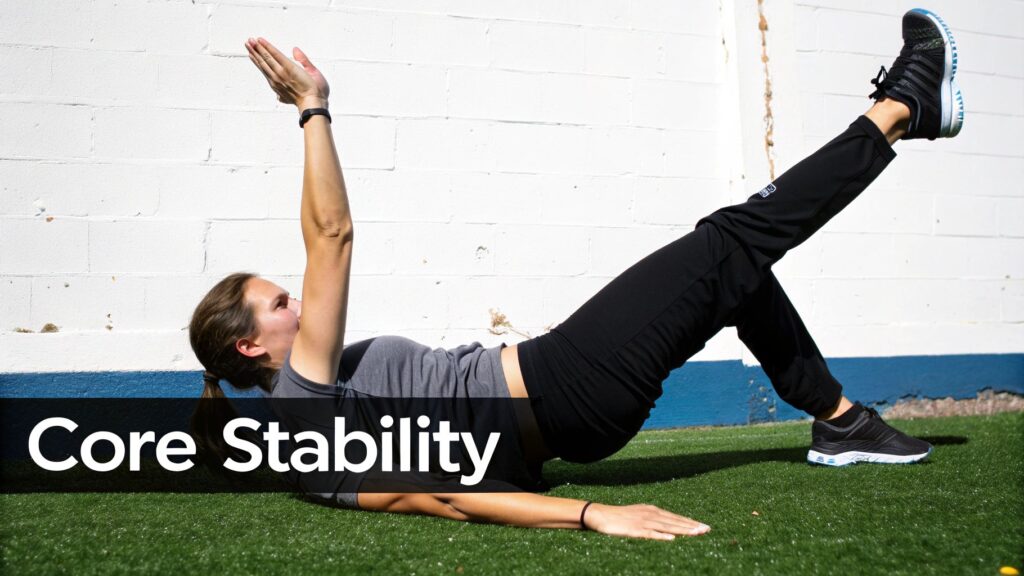
Hollow Body Hold
Sets: 3 | Hold: 15–20 sec | Rest: 45 sec
Lie on your back and press your lower back into the floor. Extend your arms behind your head and your legs out in front of you, lifting both slightly off the floor. Hold that position with your core fully braced. This is harder than a plank for most people and should be treated accordingly bend your knees if needed to reduce the lever arm. As with the plank, tension throughout the hold matters more than duration.
What Rest Days Are Actually For
Rest days are where adaptation actually happens. During a session you signal to the body that it needs to get stronger during recovery, it does. Skipping rest days or adding extra sessions interrupts that process. Light movement is fine a walk, some mobility work but that is different from training.
Post session soreness, known as DOMS, typically peaks 24–48 hours after training and clears on its own. Training through mild soreness is generally fine. Soreness that does not improve after 72 hours is worth paying attention to.
Progressive Overload: The Only Mechanism That Matters
Progressive overload means giving your body a slightly harder challenge over time. Once it has adapted to a given weight and rep range, doing the same thing produces diminishing returns. For beginners, the simplest application is adding 2.5kg to compound exercises once you can complete all sets and reps with good form. That is linear progression, and it works well early on because there is so much room to improve.
When weekly weight increases stop being realistic, add reps instead 3×10 to 3×11 to 3×12 then increase the weight and reset. Track your sessions. Without a record of what you lifted, progressive overload becomes guesswork.
What to Actually Expect
Visible results take longer than most content suggests. Muscle size changes take weeks to appear; body composition changes take months. What shows up earlier is better movement quality the squat gets smoother, weights that felt heavy in week two feel manageable in week six. That is real adaptation, it just does not photograph well yet.
Expect soreness in the first two to three weeks. It fades as the body adapts, replaced by a different kind of fatigue one that feels more like the muscles were worked than punished.
Closing
Most people who train consistently started somewhere that looked like this three days a week, basic movements, modest weights. The plan evolves, but the fundamentals do not. The version that works is the one you actually follow long enough for the adaptation to accumulate.