
 By
By TL;DR
Burnout is a state of chronic exhaustion that goes well beyond ordinary tiredness it affects how you think, feel, and function over time. It tends to develop slowly and is easy to miss until it has already done significant damage. The word gets thrown around casually, but what is burnout in a clinical sense is a recognized pattern of emotional exhaustion, growing detachment, and reduced effectiveness. Recovery is not simply a weekend off. It often requires real changes to how much you’re doing, how you’re doing it, and sometimes why. This article looks at what burnout actually is, where it comes from, and what the research says about getting through it.
What Burnout Actually Is (And What It’s Not)
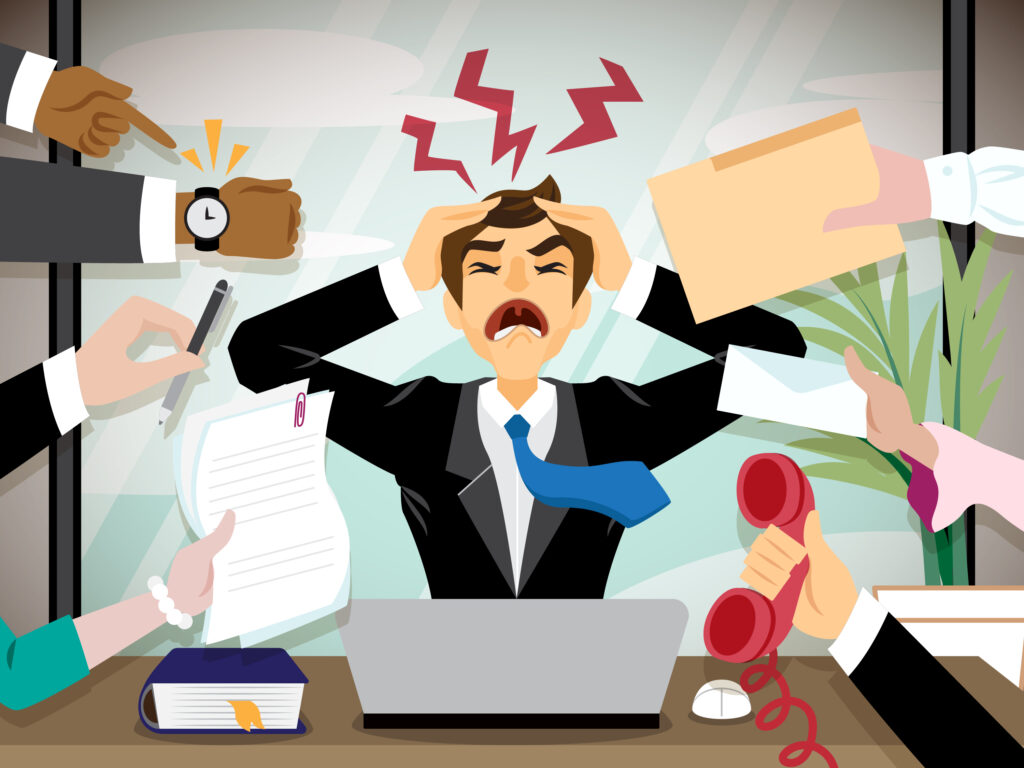
The term burnout has been around since the 1970s, when psychologist Herbert Freudenberger used it to describe what he was watching happen to volunteers at a free clinic people who started with enormous dedication and, after months of relentless output, became hollow versions of themselves. The concept was later built out significantly by researcher Christina Maslach, whose work formed the foundation of how burnout is still understood today. What is burnout, in the framework she developed, is essentially three things happening together: emotional exhaustion, depersonalization a kind of detachment from your work or the people around you and a reduced sense of personal accomplishment.
The reason it gets confused with regular stress or tiredness is that it shares surfacelevel symptoms with both. You’re exhausted. You’re less effective. You don’t want to do the things you used to. But regular stress tends to be responsive it rises under pressure and eases when the pressure lifts. Burnout often doesn’t fully ease. It becomes a baseline. The exhaustion often persists even after rest. The detachment doesn’t lift after a good night’s sleep. That’s the key difference: burnout is persistent in a way that ordinary stress is not.
It’s also worth separating burnout from depression, though the two can overlap and sometimes coexist. Depression tends to reach into every area of life with a more generalized, heavy quality. Burnout is often more domainspecific most strongly felt around work, or study, or whatever the highdemand context is though in more severe cases it can bleed into other areas of life too. When you physically step away from the source early on, there’s sometimes brief relief. With depression, that relief is harder to find. The distinction matters because the recovery paths are not identical, and because misidentifying one as the other can send you in the wrong direction.
How It Builds

Burnout rarely announces itself. It tends to accumulate in the background while the person experiencing it is busy being productive, highfunctioning, and apparently fine. This is part of why it’s so difficult to catch early. The people most vulnerable to burnout are often the ones who care deeply about their work, their output, their sense of responsibility to others. The traits that make someone good at what they do are often the same traits that make them susceptible.
Research into burnout consistently identifies certain conditions that are strongly linked to its development. Chronic workload that exceeds what someone can realistically manage is the most commonly cited one. But equally significant are things like lack of control over how you work, feeling like your effort isn’t being recognized, a breakdown in community or belonging within a workplace, a sense of being treated unfairly, and a conflict between your values and what you’re actually being asked to do. When several of these are present at once, the erosion tends to happen faster.
There’s a phase that often appears before full burnout takes hold that researchers sometimes call the disillusionment stage you’re still functioning, still showing up, but something has shifted. Things that used to feel meaningful start feeling mechanical. You notice yourself becoming more cynical about people or situations you used to care about. The emotional investment quietly withdraws. By the time most people recognize this pattern for what it is, they’re already deeper into the process than they realized.
The Physical Side of Burnout
It’s easy to think of burnout as a purely mental or emotional experience, but the body is involved in ways that are genuinely worth understanding. Chronic psychological stress activates the same stressresponse systems the body uses for physical threats. Over time, sustained activation of those systems is associated with measurable physical effects disrupted sleep, immune suppression, elevated inflammation, hormonal changes. The tiredness of burnout isn’t just metaphorical. It has a biological dimension that doesn’t simply resolve when the demands ease.
Some people in burnout experience physical symptoms before they notice the psychological ones persistent headaches, frequent illness, gastrointestinal issues, the sense of being physically run down in a way that doesn’t respond to normal recovery. Sleep becomes unreliable: either you can’t fall asleep, or you sleep for long hours and wake up still exhausted. Appetite changes. Concentration deteriorates in a way that feels almost physical not just unmotivated, but genuinely cognitively sluggish.
This is worth knowing because it reframes how recovery needs to work. You usually can’t think your way out of burnout alone. The system that’s been under strain is not just psychological it’s physiological too. Recovery has to account for both, which means rest is not optional, and meaningful rest has to be more than just pausing the activities that are draining you.
What Recovery From Burnout Actually Involves

The honest answer is that recovery often takes longer than people expect, and it tends to require changes that feel more significant than just taking a break. A vacation helps, but it rarely resolves things on its own. Coming back to the same environment, with the same demands and the same dynamics, often means the exhaustion returns quickly. Real recovery often involves some level of structural change to workload, expectations, or environment though how much of that is within any individual’s control will vary depending on their situation.
Rest that actually restores tends to look different from passive collapsing. Research on recovery particularly work by Sabine Sonnentag and colleagues distinguishes between activities that allow psychological detachment from the source of stress, physical recovery, mastery experiences doing something you’re good at that feels separate from your work, and activities that give you a sense of control over your own time. All four tend to matter. Scrolling a phone for hours technically isn’t work, but for many people it tends to be less restorative than it feels in the moment.
If burnout has reached a level where it’s significantly affecting your daytoday functioning, talking to a therapist or doctor can help clarify what you’re dealing with and support recovery more directly. That isn’t a detour from the process for many people it’s part of it.
One of the harder parts of recovery is rebuilding a relationship with work or the demanding context without immediately reentering the same cycle. Some people find that the burnout itself forces a kind of clarity about what they actually want to be doing with their time and energy, which in retrospect feels like useful information even if the process of getting there was costly.
Why “Just Take a Break” Isn’t the Whole Answer

There’s a version of burnout advice that’s essentially: slow down, take time for yourself, prioritize selfcare. None of that is wrong, exactly, but it locates the solution entirely in the individual as if burnout is primarily a personal management problem rather than something that emerges from conditions that are often structural and systemic. The research is fairly consistent that what is burnout is not primarily a failure of resilience or selfmanagement. It’s a response to conditions that are consistently associated with exceeding what people can reasonably sustain over time.
This matters practically because it shifts where the intervention needs to happen. Yoga and journaling might be helpful, but they’re not adequate substitutes for reducing a genuinely unsustainable workload. Recovery strategies that focus only on the person on how to become more resilient, more organized, better at setting limits can inadvertently add more demands to someone who is already overwhelmed. The most effective recovery tends to happen when both sides are addressed: the individual does work to recover and rebuild, and the conditions that contributed to burnout shift in some meaningful way, even if that shift is partial.
This doesn’t mean the individual has no agency. It means having an accurate picture of what you’re dealing with, rather than blaming yourself for struggling under genuinely difficult conditions.
Where That Leaves You
Burnout tends to arrive quietly and leave slowly. It can take weeks or months to accumulate and often a similar amount of time to recover from not because people are weak or undisciplined, but because the systems involved take time to regulate back down. Understanding what is burnout at a deeper level doesn’t make recovery instant, but it does tend to make the path clearer. It’s harder to recover from something you’re misidentifying as laziness or a lack of willpower.
There’s something notable about the experience of burnout for people who tend to be highfunctioning. The same drive that helped them accomplish a lot becomes part of what makes recovery difficult the pull to push through, to not slow down, to frame exhaustion as something to overcome rather than something to pay attention to. Burnout, in that sense, is partly the body and mind registering what the mind has been trying to ignore.
Whatever led to it, the period of recovery when taken seriously sometimes turns into something more than just returning to normal. Normal, after all, was the context in which it developed.