

 By
By TL;DR
Therapy is not a single method or a last resort. It is a structured conversation with someone trained to help you understand how your thoughts, emotions, and behaviors connect. Different types of therapy focus on different parts of that process, but most aim to make patterns more visible and easier to work with. People often consider therapy when something feels off for a while, not just during major crises. The first session is usually more about understanding your situation than trying to fix anything immediately. Deciding whether you need it is less about meeting a threshold and more about whether you feel stuck in ways you cannot seem to resolve on your own.
What Therapy Actually Is
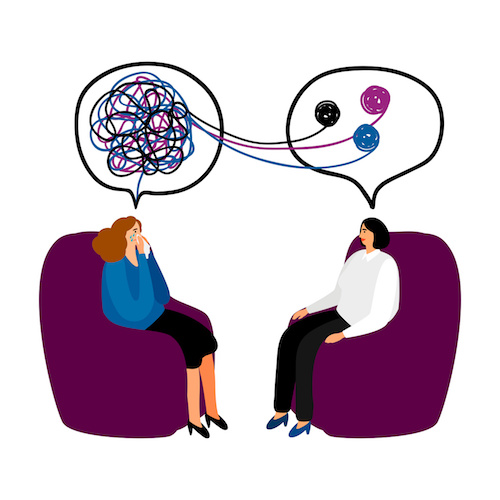
There is a common assumption that therapy is about giving advice or solving problems directly. In reality, it tends to work differently.
At its core, therapy is a space where your internal experience is taken seriously and examined with some structure. Not casually, not in passing, but with sustained attention. That alone is unusual. Most conversations in everyday life move quickly. Even when people listen, they often respond with their own experiences, interpretations, or solutions. Therapy slows that process down.
The goal is not simply to talk, but to notice patterns. The way you react to certain situations. The thoughts that show up repeatedly. The emotional responses that feel disproportionate or confusing. Over time, these patterns become clearer, not because someone points them out once, but because you start recognizing them yourself.
There is also a difference in perspective. When you are inside your own experience, everything feels immediate and personal. Therapy creates a bit of distance from that. Not detachment, but enough space to observe rather than just react. That shift can change how you relate to your thoughts in a way that is difficult to achieve alone.
Different Types of Therapy, Explained Simply
The word therapy covers a wide range of approaches, which can make it feel more complicated than it needs to be. Most of them are built around similar ideas but focus on different entry points.
One common approach is cognitive behavioral therapy. This tends to focus on the relationship between thoughts and behaviors. The idea is that certain patterns of thinking can reinforce certain behaviors, which then reinforce the original thoughts. It is often practical and structured, sometimes involving exercises or ways to test assumptions.
Another approach looks more at emotional patterns and past experiences. This includes forms of therapy that explore how earlier relationships or events shape how you respond in the present. It is less about immediate problem solving and more about understanding why certain patterns exist at all.
There are also approaches that focus on awareness in the present moment. These tend to pay attention to how thoughts and emotions arise without immediately trying to change them. The aim is not to eliminate discomfort but to relate to it differently.
In practice, many therapists draw from more than one approach. The categories exist, but sessions often feel less rigid than the labels suggest. What matters more is whether the way the conversation unfolds actually helps you see things more clearly.
When People Usually Start Thinking About Therapy

People rarely wake up one day and decide to try therapy without some kind of buildup. There is usually a period where something feels off, but not necessarily dramatic enough to demand attention.
Sometimes it shows up as repetition. The same kind of conflict in relationships, the same cycles of motivation and burnout, the same thoughts that seem to loop without resolution. You might find yourself asking why this keeps happening, without landing on an answer that feels complete.
Other times it is more subtle. A sense that your reactions do not quite match the situation. Feeling more irritable, more withdrawn, or more anxious than you expect, even when nothing obvious has changed. It can be difficult to point to a single cause, which makes it easier to dismiss.
There is also the experience of being stuck. Not in a dramatic sense, but in a quiet way where things are not moving forward. You understand what you should do, at least logically, but something does not translate into action. That gap between knowing and doing can be frustrating in a way that is hard to explain to others.
Then there are more acute situations. Loss, major life changes, periods of high stress. These are more clearly associated with seeking help, but they are not the only reasons people consider therapy.
What tends to matter is not the severity of the situation in some objective sense, but the degree to which it feels unresolved over time.
The Hesitation Around Starting
Even when someone is aware that therapy might help, there is often hesitation.
Part of it is uncertainty. Not knowing what will happen in a session, or whether it will actually be useful. There can also be a sense that problems should be handled independently, that needing help reflects some kind of failure to cope.
There is also the concern about being understood. Talking about your internal experience in detail can feel exposing, especially with someone you have just met. There is a question in the background. Will this person actually get it, or will it feel like explaining something that cannot quite be translated?
Cost, time, and access are practical barriers as well. Therapy requires consistency to be effective, which can make it feel like a commitment rather than a simple decision.
All of these factors contribute to why people often delay starting, even when they have been thinking about it for a while.
How to Find a Therapist Without Overcomplicating It

Looking for a therapist can feel like trying to choose something you do not fully understand yet.
There are directories and platforms that allow you to filter by approach, experience, or areas of focus. That can be useful, but it can also create the impression that you need to find the perfect match immediately.
In reality, the fit becomes clearer through interaction rather than research alone. A therapist might have the right qualifications on paper, but the actual experience of talking to them matters more. Whether you feel heard, whether the conversation feels natural enough to continue.
Practical considerations do matter. Availability, cost, and whether sessions are in person or online can shape the decision. But beyond that, it often comes down to a more intuitive sense of whether the space feels workable.
If something feels consistently off after a few sessions, it is generally acceptable to look elsewhere. That is part of the process rather than a failure of it.
What the First Session Usually Feels Like
The first session tends to be less intense than people expect, and sometimes less immediately helpful than they hope.
It often starts with basic questions. What brought you here, what has been going on, what you are hoping to get out of the process. It can feel a bit structured, almost like an intake rather than a deep conversation.
There may be moments where you are not sure how much to say or where to begin. That is normal. You are essentially describing something that has been unfolding over time, which is difficult to condense into a single conversation.
The therapist is usually trying to understand the broader context rather than jumping into interpretations right away. That can make the session feel slower or more observational.
Some people leave the first session feeling relieved, others feel unsure. Both reactions are common. The value of therapy tends to emerge over multiple sessions rather than in a single breakthrough moment.
What Therapy Is Not

There are a few misconceptions that shape expectations in ways that can be unhelpful.
Therapy is not a place where someone tells you exactly what to do. Advice might come up occasionally, but it is not the main function. The goal is to help you understand your own patterns well enough to make decisions that feel grounded rather than reactive.
It is also not a quick fix. The process can take time, partly because the patterns involved have often been developing for years. Trying to rush that tends to lead to frustration.
It is not only for extreme situations. Waiting until things become unmanageable is one path, but not the only one. Many people start therapy while still functioning in most areas of their life, simply because something feels unresolved.
A Different Way to Think About Needing It
The question of whether you need therapy can be difficult to answer directly.
There is no clear threshold where someone officially qualifies. It is less like a diagnosis and more like noticing whether your current ways of understanding and handling things are working.
If you imagine your internal world as something you have been trying to figure out on your own, therapy becomes another way of looking at it. Not necessarily better in every case, but different enough to reveal things you might not see from your usual perspective.
The idea of needing it might not be the most useful framing. A more practical question might be whether having that kind of structured space could help you understand something that currently feels unclear or unresolved.
Closing Thoughts
There is something slightly unusual about choosing to sit down and examine your own thoughts and emotions with another person on a regular basis. It is not how most people are used to dealing with things.
At the same time, much of what shapes how we live stays just below the surface of awareness. It influences decisions, relationships, reactions, without always being fully understood.
Therapy does not remove that complexity. If anything, it makes you more aware of it. But awareness has a way of changing how things feel, even before anything external shifts.