

 By
By TL;DR Trauma is not just about extreme events. It refers to any experience that overwhelms your nervous system’s ability to process what happened. The brain responds to trauma by storing memories differently, often in ways that continue to affect mood, behaviour, and physical health long after the event is over. Not everyone responds to the same event the same way, and that variation is not a character flaw. It reflects genuine differences in biology, history, and context. Understanding what trauma actually does to the brain, and how trauma affects the brain at a biological level, helps explain reactions that might otherwise feel confusing or disproportionate.
If You Do Nothing Else, Do This
Before getting into the science, here are a few grounded things worth holding onto as you read:
- Notice patterns rather than isolated incidents. If a certain type of situation consistently leaves you feeling unsettled, that pattern is worth paying attention to.
- Pay attention to physical signals. Tension in the jaw, a tight chest, a sudden urge to leave a room. The body often registers something before the mind catches up.
- Do not dismiss reactions just because they seem disproportionate. A response that feels too big for the situation usually has a history behind it.
- Pause before labelling yourself. “Overreacting” is rarely the full explanation.
- If these patterns are affecting your daily life or relationships in a persistent way, speaking with a therapist who works with trauma is a reasonable next step, not a dramatic one.
What Trauma Actually Means

The word trauma gets used a lot, often in ways that either overstate or understate what it covers. Some people reserve it only for catastrophic events like war, assault, or serious accidents. Others use it for any difficult experience, which sometimes draws skecpticism. The psychological reality sits somewhere more nuanced than either of those positions.
At its core, trauma refers to an experience, or a series of experiences, that exceeded the nervous system’s capacity to process and integrate what happened. The event does not have to be objectively extreme. What matters is the impact on the person experiencing it. Two people can go through something nearly identical and one walks away relatively unaffected while the other carries it for years. That is not a weakness. That is the reality of how individual nervous systems, histories, and circumstances interact.
Psychologists often distinguish between what is sometimes called big-T trauma and small-t trauma. Big-T trauma refers to the kinds of events most people would recognize as serious: life-threatening situations, violence, severe loss, abuse. Small-t trauma refers to events that are less obviously dramatic but still disruptive to a person’s sense of safety, identity, or stability. Childhood emotional neglect. Chronic humiliation. Growing up in an environment of unpredictability. These experiences may not register as trauma in the way people expect trauma to look, but the nervous system processes them as threatening nonetheless. Over time, accumulated small-t experiences can be as disruptive as a single large one.
The distinction matters not because it creates a hierarchy of suffering, but because it helps explain why some people feel the effects of trauma without being able to point to a single identifiable event that seems serious enough to justify what they are experiencing.
Why Trauma Does Not Always Look Like Trauma
This is where a lot of confusion starts. People tend to imagine trauma as something visible, acute, and clearly traceable to one defining moment. In reality, it often looks quieter than that. It looks like someone who shuts down during arguments. Someone who cannot relax even when everything is fine. Someone who keeps finding themselves in the same kinds of situations and cannot quite explain why.
The reason it goes unrecognized is that the effects of unprocessed experience do not always wear a label. They show up as personality, as habit, as preference, as things people assume are just the way they are. Understanding the neuroscience behind this is not about pathologizing ordinary human variation. It is about offering a more accurate explanation for patterns that have resisted simpler ones.
How the Brain Stores Traumatic Memories
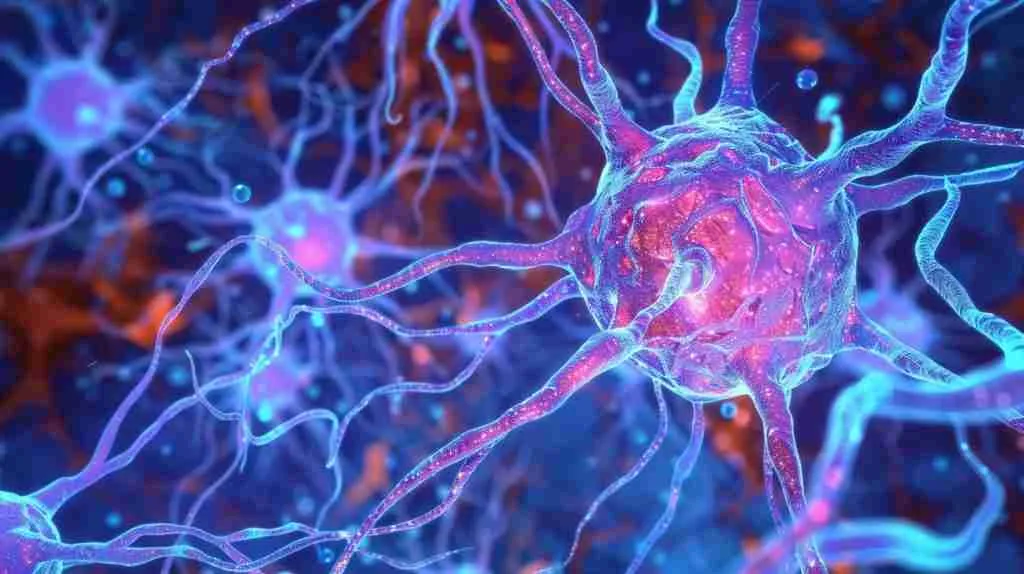
Memory is not a recording device. It does not capture events with neutral precision and store them in sequence. Memory is a reconstruction, and every time you recall something, you are partly rebuilding it, influenced by your current state, context, and emotional associations. Traumatic memory is a particularly striking version of this.
When something threatening happens, the brain’s alarm system, the amygdala, activates immediately. It flags the experience as dangerous and triggers the body’s stress response: elevated heart rate, narrowed attention, heightened senses. The thinking parts of the brain, particularly the prefrontal cortex, tend to go offline somewhat during this process. That is adaptive in the moment because you do not need to deliberate when you need to move fast.
But it creates a problem for how the memory gets stored. Because the higher-order processing centres are partially bypassed, traumatic memories often do not get filed away with the usual contextual markers that tell the brain this happened, it is over, it is in the past. Instead, they can get stored in a more fragmented, sensory form: images, smells, sounds, physical sensations, without a clear narrative structure. This is partly why trauma does not always feel like a memory in the way other memories do. It can feel like something happening now rather than something that happened then.
Research into how the brain processes threat suggests that the hippocampus, the region that normally helps place memories in time and context, functions differently under high stress. The stress hormones released during threatening experiences can impair its ability to properly encode what happened. The result is that some elements of the experience remain vividly accessible while others are fragmented or missing. This also helps explain why trauma responses can be triggered by things that seem unrelated to the original event. A sensory detail that was present at the time, even something peripheral, can activate the alarm system again because the brain has associated that detail with danger.
What Trauma Does to the Body
Trauma is not only a psychological phenomenon. The body holds the effects of threatening experiences in ways that are measurable and real.
The stress response that activates during a threatening event is designed to be temporary: a short burst of cortisol and adrenaline that helps you respond and then dissipates once the threat has passed. When trauma is not adequately processed, the nervous system can remain in a kind of low-level activation. The body continues to operate as though the threat is still present or could return at any moment. This is sometimes described as a dysregulated nervous system, one that is not properly returning to a baseline state of calm.
This shows up physically in various ways. Chronic muscle tension, particularly in the neck, shoulders, jaw, and lower back, is commonly reported. Sleep disruption is very frequent because the nervous system’s continued alertness makes it hard to move into the deeper, restorative stages of sleep. Digestive issues appear in the research more than most people expect, partly because the gut has its own extensive nervous system that is highly sensitive to stress signals. Immune function can also be affected over time, since the body’s resources are redirected toward readiness for threat rather than maintenance and repair.
None of this means that physical symptoms automatically point to unresolved trauma. Bodies are complicated. But it does mean that trauma does not stay neatly inside the mind. It distributes itself through the body’s systems, which is one reason why talk-based approaches alone are not always sufficient for processing it.
Why People React So Differently to the Same Experience

This is the part that tends to confuse people most, including those trying to make sense of their own responses. Why does one person seem to recover quickly from something serious while another carries something comparatively minor for years?
The answer is not about strength or resilience in any simple, fixed sense. Prior experience matters significantly. Someone who grew up with a stable, responsive environment has generally built up more internal resources for processing difficult events. Someone who grew up amid chronic stress or unpredictability may have a nervous system that was already primed toward hypervigilance before any single event occurred. It does not take much additional load to overwhelm a system that was already working hard.
The context surrounding a threatening experience also shapes its impact. An event that happens alongside support, where someone is present, responds with care, and helps the person make sense of what happened, is processed differently than the same event experienced in isolation. One of the consistent findings in trauma research is that the presence of a caring relationship in the aftermath can significantly change how an experience is integrated.
Biology plays a role too. Differences in how the stress response system is regulated, partly shaped by genetics and partly by earlier experiences, mean that people have genuinely different thresholds and patterns of activation. This is not a metaphor. It is physiology. When someone’s response to something seems disproportionate, that disproportionality usually has a history behind it, and that history is not always visible from the outside.
When the Past Keeps Showing Up in the Present
One of the more disorienting aspects of unresolved trauma is that it does not announce itself clearly. It tends to show up obliquely: in patterns of behavior, in emotional reactions that feel out of proportion, in a persistent sense of low-level dread, in difficulty trusting or feeling safe, in an inability to stay present in moments that should feel fine. A lot of people spend years assuming they are just anxious, or irritable, or bad at relationships, without ever connecting those patterns to something earlier.
This happens because the brain, having catalogued certain kinds of sensory or emotional information as danger signals, continues to use those signals as warning flags. It is not a conscious process. The person does not decide to be triggered by something. The nervous system responds before the thinking brain even has a chance to evaluate whether the situation is actually threatening.
This can look like a lot of things that do not get labeled as trauma responses from the outside. Irritability, difficulty concentrating, emotional numbness, avoidance of certain situations or conversations, a hair-trigger response to conflict, difficulty feeling pleasure: these can all be expressions of a nervous system that has not returned to a settled state.
If any of this feels relevant and persistent, it is worth taking seriously rather than rationalizing away. Therapy, particularly modalities that work with the body and the nervous system rather than just cognitive content, has genuine evidence behind it for processing traumatic experience. That is not a prescription, just worth knowing that support exists beyond trying to think your way through it.
The Part That Does Not Get Said Enough
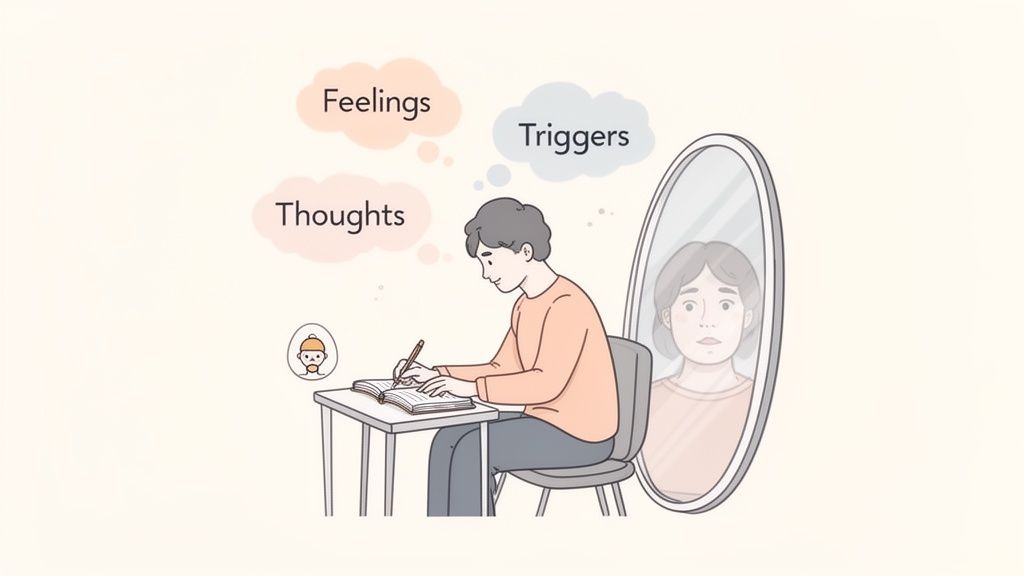
Trauma is not a verdict on a person’s character. It is not proof that someone is too sensitive, too fragile, or unable to cope. It is a description of what happens when a nervous system encounters something it does not have the resources to fully process in the moment it occurs.
The brain’s responses to trauma are, in a strange way, evidence of how well the system works. The problem is not that the alarm went off. It is that it sometimes keeps going when the original danger is long past. Understanding that does not automatically resolve anything. But it does change the framing. A response that once looked like weakness or instability starts to look more like an accurate biological record of something that happened and was not yet fully integrated.
That is a meaningfully different way of seeing it. And it tends to matter, even when nothing else has changed yet.
This article is for informational purposes only and does not constitute medical advice. If you are experiencing symptoms that are severe, persistent, or significantly affecting your daily life, please consider speaking with a qualified mental health professional who can offer appropriate support and guidance.