

 By
By TL;DR
Full body workouts feel efficient, grounded, almost adult. Splits feel focused, obsessive, a little nostalgic for when we had more time and energy. We move between them depending on what phase we’re in — busy, motivated, bored, recovering, avoiding something. Neither is magic. Neither is wrong. It’s mostly about who we are at that moment and how much we’re willing to carry that day. And somehow, it always feels heavier than it used to.
The older we get, the more this question changes
When we first start lifting, we don’t really think about programming. We copy whatever looks intense. Chest day. Arm day. Something with a pump. Something that makes us feel like we did something serious.
Back then, a split routine felt like structure. Monday chest. Tuesday back. Wednesday legs. We liked saying it out loud. It made us sound committed. Organized. Like we had a system.
Now, at 35, sitting on the edge of a flat bench after a set that felt heavier than it should have, the question feels different. It’s less about optimization. More about survival./e/
Full body or split isn’t about gains anymore. It’s about energy. It’s about how wrecked we’re willing to feel tomorrow. It’s about whether we’ll actually show up three times this week… or five.
The fluorescent lights at 5:30am don’t care which plan we choose. They just hum above us while we try to wake up.
Full body feels responsible
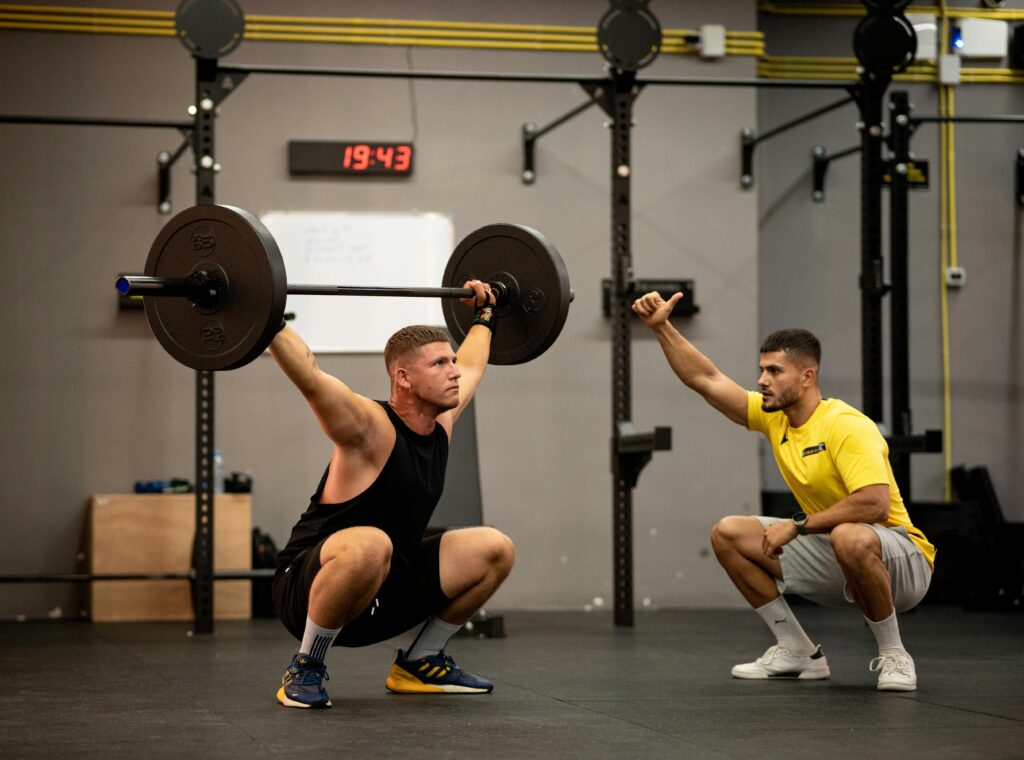
There’s something very adult about a full body workout.
Three days a week. Hit everything. Leave.
It feels like budgeting. Like paying bills on time. Efficient. Mature.
When life gets busy — work stretching longer than expected, sleep slightly worse than it used to be, random aches that weren’t there ten years ago — full body makes sense. We miss a day? Fine. We still trained everything twice this week.
There’s comfort in that.
I’ve had phases where I’d sit in the car before going in, debating whether I even had the energy. Full body makes that decision easier. “Just go in. Squat. Press. Row. Get out.” No drama. No specialty day to miss.
And maybe that’s why it feels… less exciting.
There’s no big arm day to look forward to. No heroic leg day to mentally prepare for. It’s just… training. Everything. Every time.
It’s strangely grounding.
But sometimes grounding feels boring.
Splits feel like we still care
There’s something about a proper split that feels nostalgic.
Walking in knowing it’s chest day. Or back day. Or legs. There’s intention there. Focus. We get to obsess over one muscle group like it matters more than the others.
And it kind of does. At least for that hour.
We take longer rest periods. We stare at the mirror a bit more. We retie our shoes twice in the locker room before leg day like it’ll make the bar lighter. We scroll our phones between sets pretending we’re tracking volume when we’re really just delaying the next set.
A split makes us feel serious again.
But it also demands more from us.
Miss one session and the whole thing shifts. Skip leg day and now it’s next week before you touch a barbell squat again. That starts to mess with our heads.
And that’s when we begin avoiding eye contact with ourselves in the mirror.
Energy is not what it used to be
No one tells you that warm-ups will start feeling like work.
The empty bar doesn’t feel empty. The first working set doesn’t feel like the first. Recovery takes longer. Sleep matters more than we want to admit.
Full body can be humbling here.
Because you’re asking your body to do everything in one session. Squat and bench and hinge and pull. There’s nowhere to hide. By the time you get to the last movement, you’re not chasing intensity anymore. You’re negotiating with fatigue.
Splits let you compartmentalize exhaustion.
Leg day wrecks you — but at least tomorrow is just shoulders. Or arms. Something smaller. Something manageable.
We start choosing based on how wrecked we’re willing to feel.
That’s a different kind of metric than we used to use.
Are we training… or just maintaining something?
There’s a subtle shift that happens after a decade.
We stop chasing size aggressively. Or maybe we just admit we don’t care enough to suffer for it the way we once did.
Full body often feels like maintenance. Like keeping the engine running. Strength steady. Joints moving. Nothing dramatic.
And there’s something honest about that.
But splits… splits feel like we’re still building. Still trying. Still pushing certain lifts up because we want to see numbers move.
Sometimes that matters.
Sometimes we need to feel like we’re progressing at something, even if the rest of life feels stagnant.
So we choose the split. Not because it’s superior. But because we need to believe we’re still improving somewhere.
Other times we’re just tired. And full body feels enough.
The boredom factor
We don’t talk about boredom enough.
Doing full body three times a week can start to blur together. Same movements. Same order. Same soreness pattern.
There’s stability there, yes.
But also repetition in a way that can dull the edge.
Splits break that up. Different focus each day. Different soreness. Different kind of fatigue. It feels dynamic. Less monotonous.
But then splits introduce a different boredom.
The long chest sessions. The endless sets. The diminishing returns by the fifth exercise. That moment when you realize you’re doing cable flyes mostly because you don’t want to admit you’re done.
We get bored either way.
Maybe that’s not about programming. Maybe that’s just what happens when we do something for years.
Ego shows up quietly
Full body has a way of keeping ego in check.
You can’t annihilate one lift because you still have three more to survive. You pace yourself. You think long-term inside the session.
It forces moderation.
Splits let ego breathe.
We load up the bar on chest day because that’s the only thing that matters today. We push that last rep harder because there’s no heavy squat after this. It feels good. It feels like the old days.
But ego has a cost.
Sore elbows. Tweaky knees. That dull lower back tightness that lingers longer than it used to.
At 25, we’d ignore it.
At 35, we notice it when tying our shoes.
9pm sessions feel different than 5:30am ones
Late-night sessions on a split hit differently.
There’s a certain closing-time energy at 9pm. Fewer people. Slightly stale air. We move slower. We don’t talk much. Just finish what’s written.
Full body at 9pm can feel overwhelming. The list of movements looks long when you’re already drained from the day.
But at 5:30am, full body feels clean. Efficient. In and out before the world starts demanding things from us.
Splits in the morning feel heavier. That dedicated leg day before sunrise can feel like punishment.
The choice isn’t just about muscles. It’s about time of day. Mood. Whether we’ve had enough coffee.
We don’t admit that when we debate it online. But we know.
Phases we don’t talk about

There are phases where we avoid the gym entirely for a week. Or two.
Coming back from that feels awkward. We avoid eye contact with the regulars. We test weights that used to be comfortable and suddenly feel unsure.
Full body makes re-entry easier.
Lower commitment. Lower psychological pressure. We can tell ourselves, “Just get through this.”
Splits feel heavier after time off. Like we owe the program something. Like missing days means we’ve broken a contract.
Sometimes that pressure helps.
Sometimes it keeps us sitting in the car longer than we should.
It’s rarely about science
We can argue frequency and volume all day. There’s enough research to justify either approach. Hit muscles twice a week. Spread volume. Consolidate it. Whatever.
But most of us aren’t making decisions based on peer-reviewed studies.
We’re making them based on how our knees feel that week. Or how stressed we are at work. Or whether we’re bored.
We switch programs when we’re restless. When progress stalls. When we feel soft. When we feel tired.
Full body and splits become moods.
One feels disciplined and balanced. The other feels intense and focused.
Neither fixes our inconsistency.
Neither guarantees we won’t stare at our phones too long between sets.
Maybe we just need something to anchor us
After years of training, the program becomes less about results and more about identity.
Full body says, “I train.” Simple. Steady.
Split says, “I’m still into this.” A bit more invested.
Sometimes we choose based on who we want to be that month.
There’s something comforting about walking in and knowing exactly what the day is. Chest. Back. Legs. It structures the week.
There’s also comfort in knowing that if life derails Tuesday, Wednesday still hits everything.
We keep oscillating between structure and simplicity.
Between ambition and maintenance.
Between ego and preservation.
So which one?

We’ll keep asking the question like there’s a final answer waiting.
Full body vs split.
As if choosing correctly will unlock something we’ve been missing.
But sitting here now, towel over my shoulder, checking the time because I should probably head home, it feels less dramatic than that.
Some months we want focus.
Some months we just want to get in, move weight, and leave without overthinking it.
Some months we’re trying to prove something.
Other months we’re just trying not to lose what we’ve built.
We’ll switch again eventually. We always do.
Not because one failed.
Just because we changed.
And tomorrow morning, when the fluorescent lights buzz on and the bar feels slightly heavier than expected, we’ll wonder again if we picked the right one.
Still feels heavier than it should.