

 By
By TL;DR
If you have been exercising consistently and the scale is not moving, you are not broken and your metabolism is not ruined. The most common reasons why people are not losing weight despite working out come down to a few things: eating more than they think they are, not creating an actual calorie deficit, underestimating how much rest and recovery matter, and expecting results on a timeline that does not match how the body actually works. Exercise is genuinely important, but it is not the primary lever for fat loss food is. Once you understand why the scale stalls, it stops feeling like a personal failure and starts making a lot more sense.
When Exercise Does Not Do What You Thought It Would

There is a specific kind of frustration that comes from going to the gym regularly and watching the scale stay exactly where it was. You are putting in the effort. You are showing up. And nothing seems to be changing. If you have been sitting with that feeling and wondering why am I not losing weight, the honest answer is usually uncomfortable: exercise alone is almost never enough to create meaningful fat loss.
This is not a knock on exercise. Exercise does a lot of things that matter it improves cardiovascular health, builds and maintains muscle, regulates mood, supports sleep. But when it comes to fat loss specifically, the research is pretty consistent. Movement contributes far less to your total energy expenditure than most people assume, and the body is remarkably good at compensating for it in ways you would never notice.
When you start working out more, hunger often increases. Energy outside the gym often drops subtly you sit a little more, fidget less, take fewer casual steps without realizing it. This is not a character flaw. It is the body’s way of managing energy. It is called compensatory behavior, and it is one of the main reasons why exercise alone rarely produces the fat loss that the math on paper would suggest.
The Calorie Equation You Are Probably Miscalculating
The most unsexy answer to why am I not losing weight is almost always: you are eating more than you think you are. Not because you are lying to yourself, but because portion estimation is genuinely hard, and most people underestimate calorie intake by a meaningful amount sometimes by several hundred calories a day without realizing it.
A tablespoon of olive oil. A handful of nuts. The extra pour of sauce. The coffee drink that is technically a meal. None of these feel like they should matter, but they add up in ways that can quietly cancel out an entire workout. Research consistently shows that people including people who track their food tend to underreport what they eat. This is not about willpower or honesty. Human beings are just not naturally calibrated to visually estimate caloric density.
Fat loss requires a calorie deficit. That means your body needs to take in fewer calories than it burns over time. Exercise increases how many calories you burn, but it also makes many people hungrier, and the margin between burning slightly more and eating slightly more to compensate is thin enough that it disappears without anyone noticing. If the scale is not moving after weeks of consistent training, the first honest question to ask is: do you actually know how many calories you are eating?
What the Scale Is and Is Not Telling You
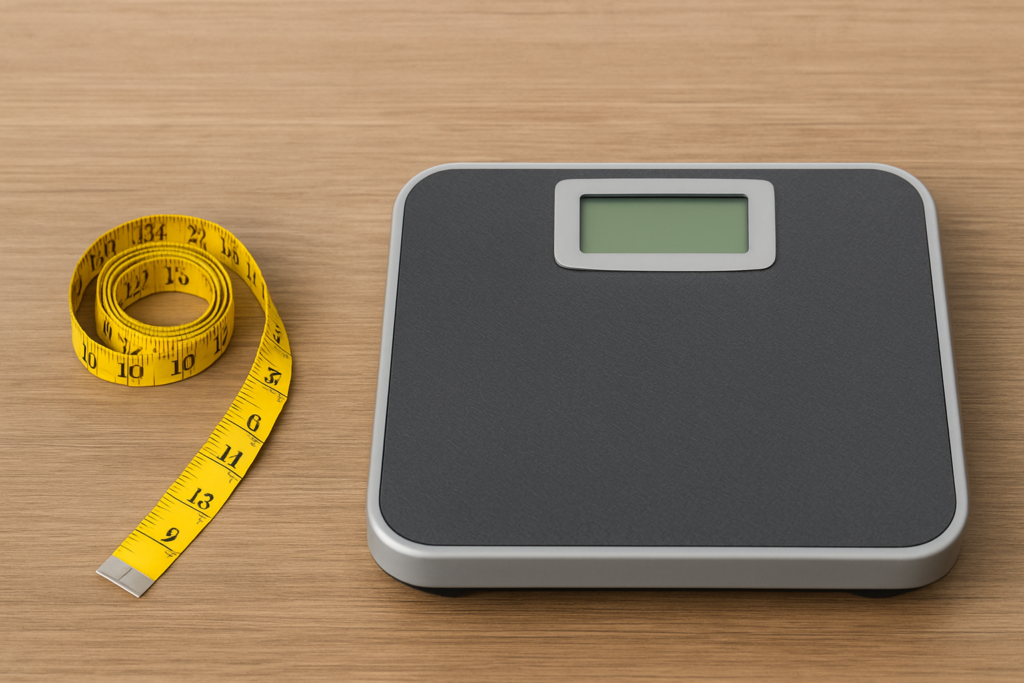
Even when fat loss is genuinely happening, the scale can sit still for weeks. Water retention, muscle gain in beginners, hormonal fluctuations, gut content all of these affect what the scale reads on any given morning. This does not mean the scale is useless. It means a single number on a single day tells you very little.
Most people step on the scale daily and judge their progress by what they see that morning. That is like checking the weather once and concluding you know the climate. Weight naturally fluctuates by one to three kilograms just across the course of a week depending on hydration, sodium intake, stress levels, and sleep quality. A single bad reading does not mean fat loss has stopped. It might just mean you ate a salty dinner.
If you are genuinely trying to track progress, weekly averages are more useful than daily numbers. Some people track measurements waist, hips, chest because those change more visibly in the early stages when muscle is being built alongside fat being lost. How clothes fit is also a real indicator. The point is not to abandon tracking, but to track things that actually reflect what is happening rather than just what you had to eat the night before.
Why You Are Not Losing Weight Even When You Think You Are Eating Right
This is where it gets a little harder to hear. A lot of people who are not losing weight despite exercising are eating in ways they genuinely believe are healthy, without those choices adding up to a calorie deficit. Healthy food is not automatically low in calories. Avocados, nuts, whole grain bread, granola, olive oil, smoothies these are all foods that can absolutely fit into a fat loss diet, but they are also calorie dense in ways that are easy to underestimate.
The phrase “eating healthy” does not mean eating in a deficit. The two things are related but not the same. You can eat nothing but whole foods and still maintain or gain weight if you are consuming more energy than your body uses. Conversely, fat loss can technically happen on a diet that includes foods most people would call unhealthy, as long as a consistent deficit is maintained. The research on this is not controversial energy balance is the core mechanism of fat loss, regardless of food quality.
That said, food quality does matter for a different reason: it affects how full you feel, how much energy you have, how you recover from training, and how sustainable your eating patterns are. High protein, high fibre foods are harder to overeat and tend to keep hunger more stable. Ultra processed foods are easier to overeat partly because they are engineered to be. But neither category is magic they still have to fit within your overall intake.
The Role of Stress, Sleep, and Cortisol Nobody Mentions

Here is something that often gets left out of the conversation: the conditions under which you are living affect fat loss in ways that have nothing to do with how hard you train. Chronic stress and poor sleep both elevate cortisol, a hormone that among other things increases appetite, promotes fat storage around the midsection, and can drive cravings for calorie dense foods.
If you are training four or five days a week but sleeping five hours a night and running on stress, your body is operating in a state that is not particularly cooperative with fat loss. Exercise adds more physical stress to a system that is already stressed. Recovery is when adaptation actually happens. Without it, you may be putting in the work without getting the return.
This does not mean you need to overhaul your entire life before fat loss can happen. But it does mean that if you have cleaned up your eating and are training consistently and the scale is still not moving, it is worth asking what else is going on. Sleep quality, stress levels, and how recovered you actually feel are not soft variables. They are directly connected to how your body manages energy and body composition.
Why Am I Not Losing Weight The Timeline Problem
Part of what makes this so frustrating is the gap between the timeline people expect and the timeline the body actually operates on. Most people start to expect visible changes within two to three weeks. Meaningful, measurable fat loss the kind that shows up reliably on the scale and in the mirror usually takes longer than that, especially if the deficit is modest, which it should be for sustainability.
A realistic fat loss rate for most people is somewhere between 0.5 and 1 percent of body weight per week. For someone who weighs 75 kilograms, that is roughly 375 to 750 grams per week. Over a month, that might be a kilogram or two. That is real progress, but it does not look dramatic in the moment. It often does not feel like anything is changing until several weeks have passed and you look back at where you started.
The expectation problem is partly a product of how fat loss is sold with before and after photos taken weeks apart showing dramatic transformations. What those photos rarely show is the longer timeline, the significant deficit required, or the specific conditions that made those results possible. Comparing your progress to that benchmark almost always ends in the wrong conclusion.
What Actually Moves the Needle

Consistent exercise matters, and if you have built a habit around it, that is genuinely worth holding onto. But for the scale to move, you need to be in a calorie deficit more days than not. That means having a rough sense of how much you are eating not necessarily tracking every gram forever, but being honest enough with yourself to know whether your intake matches your goal.
Protein intake helps more than most people realize. It keeps hunger more manageable, supports muscle maintenance during a deficit, and has a slightly higher thermic effect meaning the body uses more energy to digest it compared to fats or carbohydrates. Most evidence points toward something in the range of 1.6 to 2.2 grams of protein per kilogram of body weight as useful for people who are both trying to lose fat and maintain or build muscle.
Sleep and stress management are not bonus features. They are part of the system. A consistent sleep schedule and some form of stress regulation whether that is walking, reducing commitments, or something else that works for your life will make everything else more effective.
Sitting With the Honest Answer
The reason why am I not losing weight is such a common search is not because people are lazy or doing everything wrong. It is because the way fat loss is typically explained leaves out the parts that actually explain why progress stalls. Exercise is sold as the solution. Willpower is sold as the reason it fails. Neither framing is accurate.
Your body is doing exactly what it evolved to do: protect itself from energy scarcity. It is not your enemy. It is just running an operating system that was not designed for a world with unlimited food and desk jobs. Understanding that does not make fat loss effortless, but it does make it less confusing. And less confusion usually means less frustration which, in the long run, is what actually allows people to stay consistent long enough for something real to happen.