
 By
By TL;DR
Anxiety is your brain’s threat detection system firing sometimes when there’s a real threat, and sometimes when there isn’t. It’s not a character flaw or a sign that something is permanently wrong with you. The feelings it produces are real and physical, not just “in your head.” Understanding what’s actually happening in your body when anxiety hits makes it a lot less terrifying. And the reason so many people experience it has everything to do with how the human brain was built, not how broken yours might be.
What Anxiety Actually Is
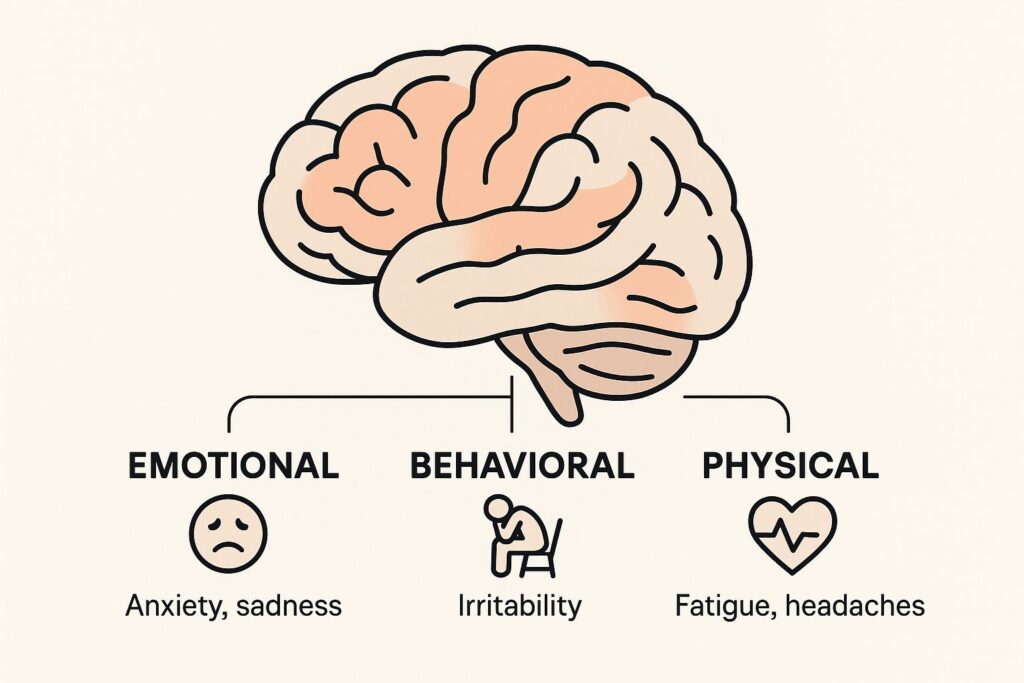
Most people who search “what is anxiety” already know what it feels like. The tightness in the chest before something big. The thoughts that won’t slow down at 2am. The low level dread that just sits there some days without an obvious cause. You’re not Googling this because you’ve never experienced it you’re Googling it because you want to understand what’s happening to you.
So let’s start there.
Anxiety, at its core, is a threat response. Your brain specifically a small almond shaped structure called the amygdala is constantly scanning your environment for danger. When it detects something that seems threatening, it sends out a signal that triggers a cascade of physical and mental reactions. Heart rate goes up. Muscles tense. Breathing gets shallow. Your mind narrows its focus and starts running through worst case scenarios. All of this is your body preparing to fight, flee, or freeze.
The thing is, this system evolved to deal with physical danger predators, physical confrontations, immediate survival situations. It didn’t evolve for job interviews, relationship arguments, social media, or the general uncertainty of modern life. But the brain doesn’t really distinguish between “a bear is chasing me” and “I have to present in front of 20 people.” To the amygdala, a threat is a threat.
Why Your Brain Does This
Here’s what makes anxiety so confusing: the system that creates it is actually working exactly as it was designed to. It’s not malfunctioning. It’s just calibrated to a world that no longer exists in the same way.
When your brain detects a threat real or perceived it releases stress hormones, mainly adrenaline and cortisol. These flood your system fast. Adrenaline is what gives you that sudden jolt of alertness. Cortisol keeps the stress response running longer. Together, they create almost every physical symptom of anxiety: the racing heart, the sweating, the tight chest, the feeling that something bad is about to happen.
What is anxiety if not this system running without an obvious off switch? That’s what makes chronic anxiety different from just being nervous before something difficult. In normal fear, the threat passes and your body calms down. In anxiety, the alarm system stays active even when the danger has passed or sometimes even when there was no clear danger to begin with.
Research generally points to a few reasons why some people’s alarm systems are more sensitive than others. Genetics plays a real role if anxiety runs in your family, you’re more likely to experience it yourself. Early life experiences matter too; a childhood environment that was unpredictable or stressful can literally shape how reactive the nervous system becomes. And ongoing life stress doesn’t help a brain that’s been running on high alert for months or years becomes increasingly primed to stay that way.
The Physical Side Nobody Talks About Enough
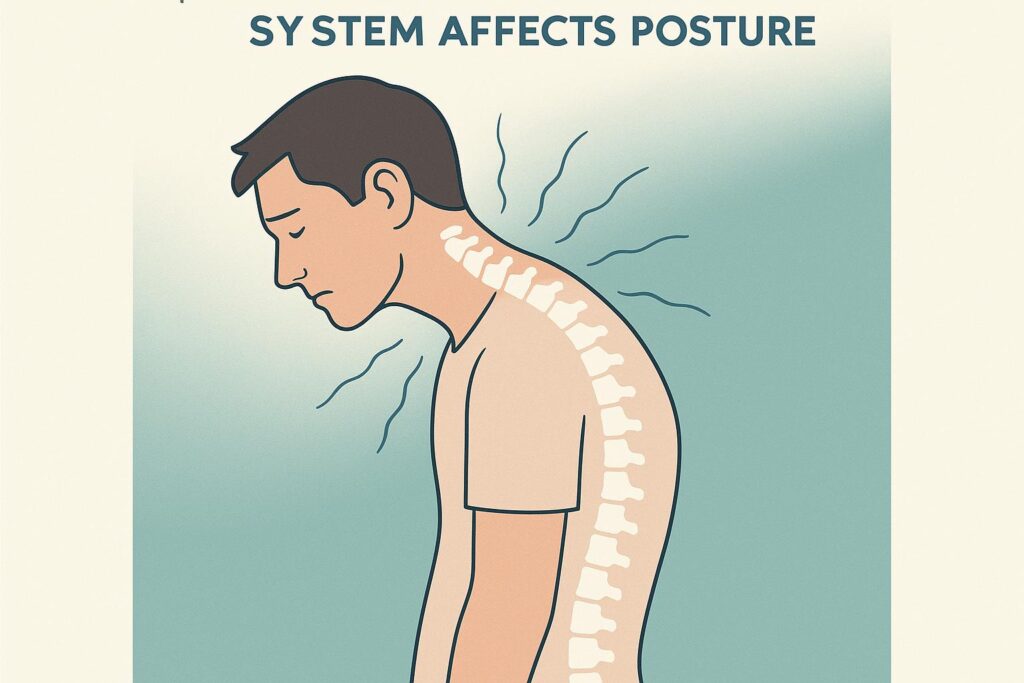
One of the most disorienting things about anxiety is that it lives in the body. People often say anxiety is “just in your head,” which is both technically true and wildly unhelpful, because what is anxiety producing if not a completely physical experience?
When anxiety is running, your body is in a state of mild to high physiological arousal. Your digestive system slows down which is why anxiety and stomach problems often go together. Your immune system can become less efficient over time under chronic stress. Your sleep is disrupted because the nervous system isn’t getting enough signal that it’s actually safe to fully rest.
Some people feel anxiety mainly as physical symptoms chest tightness, nausea, headaches and don’t even connect it to mental or emotional stress at first. That’s not uncommon. The mind body connection here is tighter than most people realize. A racing heart can trigger more anxious thoughts. Anxious thoughts can trigger a racing heart. The two feed each other in a loop that can feel impossible to interrupt once it gets going.
Understanding this loop doesn’t automatically stop it, but it does make it less alarming when it happens. When you know why your heart is racing, you’re a little less likely to spiral into thinking something is physically wrong with you on top of everything else.
When Anxiety Crosses a Line
There’s a spectrum here, and it’s worth being honest about it. Feeling anxious before something difficult, or during a period of real stress, is normal. It doesn’t mean you have an anxiety disorder. It means you have a nervous system.
But when anxiety is frequent, intense, and starts affecting your daily life when it’s changing how you sleep, who you spend time with, what you’re willing to do that’s a different conversation. Anxiety disorders are the most common mental health condition globally, which says something both about how widespread this is and how underdiagnosed it can be.
There are different forms: generalized anxiety disorder, where worry is persistent and hard to control; panic disorder, where intense physical episodes happen suddenly; social anxiety, which centers on fear of judgment or humiliation in social situations; and others. They share the same underlying machinery but show up differently for different people.
If what you’re experiencing feels persistent and disruptive, talking to a mental health professional is genuinely worth it not as a last resort, but as a practical step toward understanding your own nervous system better.
What Keeps Anxiety Going
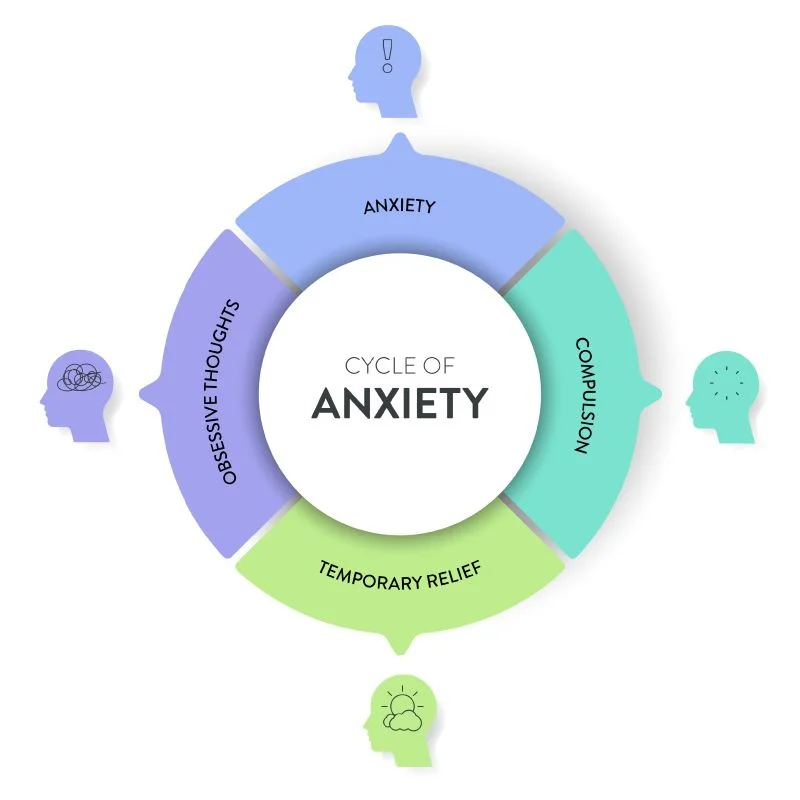
Anxiety is self perpetuating in a way that makes it harder to understand from the inside. The main engine keeping it running is avoidance.
When something makes you anxious and you avoid it, you get short term relief. The problem is that your brain registers that relief and concludes that avoiding the thing was the right call that the threat was real and you escaped it. This reinforces the anxiety rather than reducing it. Over time, the list of things that trigger anxiety can grow because the brain is constantly learning that avoidance works.
This is why pushing through avoidance not in a “just do it” way, but gradually and intentionally is one of the things that actually changes the anxiety pattern over time. The brain needs evidence that the feared thing didn’t produce the catastrophe it predicted. Every time you get that evidence, the threat signal gets a little quieter.
Overthinking is another engine. The anxious mind defaults to running through hypothetical disasters because, evolutionarily, anticipating danger was useful. But the modern version of this replaying conversations, imagining worst case scenarios, preparing for problems that may never arrive exhausts the nervous system without giving it any useful information. It’s the mental equivalent of running on a treadmill. A lot of effort, same position.
What Anxiety Is Not
It’s not weakness. It’s not evidence that you can’t handle things. It’s not something that only happens to people who are fragile.
Some of the most high functioning, capable people experience anxiety regularly. The research on this is pretty clear: anxiety is distributed across the population regardless of personality type, intelligence, or life circumstances. Certain situations amplify it. Certain backgrounds make people more susceptible to it. But it doesn’t discriminate in the way people sometimes assume.
What is anxiety, then, at its most basic? It’s a survival system that overestimates danger. That’s it. It’s not a verdict on your mental strength or your ability to cope. It’s a very old part of your brain trying to protect you just not always with great calibration.
Where This Leaves You

Understanding anxiety doesn’t make it disappear. But it does change your relationship with it slightly, and that shift matters more than it sounds.
When you know what’s happening in your body why the heart races, why the thoughts spiral, why certain situations feel unbearable when logically they shouldn’t you stop fighting the anxiety on top of everything else. You’re not confused about what’s happening. You’re not terrified of the fear itself. You’re just watching a system do what it was built to do, in a context it wasn’t really built for.
That distance, even a small one, is where most people find they can start to work with it rather than against it. Not overcome it in some dramatic way. Just live alongside it with a little more understanding of what it actually is.
thefitstate isn’t a medical resource. This is for general understanding if anxiety is affecting your day to day life, it’s worth speaking with a qualified professional.