

 By
By TL;DR
Building muscle as a beginner comes down to three things: lifting with enough effort, eating enough protein, and recovering properly. Your body responds to progressive overload meaning you have to gradually challenge your muscles more over time, not just repeat the same workout forever. Beginners actually have a rare advantage here: your body responds to almost anything in the first few months, so you don’t need a complicated program. The mistake most people make isn’t doing the wrong exercises it’s not being consistent long enough to see the actual results.
What Actually Happens When You Build Muscle
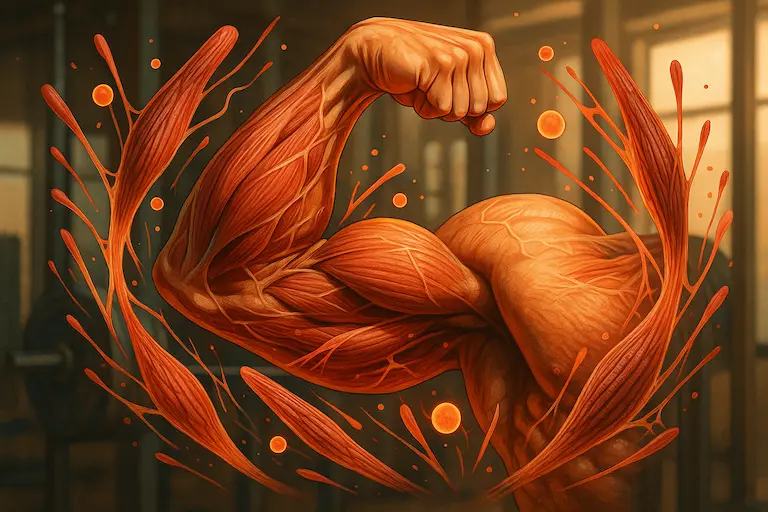
Before getting into what to do, it helps to understand what’s actually going on when you build muscle. When you lift weights or apply resistance to your muscles, you’re creating small amounts of stress on the muscle fibers. That sounds alarming, but it’s the whole point. Your body responds to that stress by repairing the fibers and making them slightly thicker and more capable of handling that load next time. Over time, that process stacks up into visible, measurable muscle growth.
This is why the soreness you feel a day or two after a workout isn’t a sign that something went wrong it’s your body doing the repair work. The technical term is delayed onset muscle soreness, but the important thing to understand is that it’s a normal part of how to build muscle in the early stages. It tends to get less severe as your body adapts, which is also completely normal.
The process itself isn’t fast. Most research points toward beginners being able to gain somewhere between half a pound to a pound of muscle per month under good conditions sometimes a bit more in the very first few months when your body is responding to the novelty. That’s not the kind of number that sounds exciting, but it adds up. A year of consistent effort can genuinely change how your body looks and functions, even if the month to month changes feel small.
The Concept That Matters More Than Any Exercise
There’s one idea that matters more than which gym you join, which program you follow, or which exercises you pick: progressive overload. It means that over time, you have to give your muscles a slightly harder challenge than what they’re already used to. If you do the exact same workout with the exact same weight for six months, your body has no reason to keep adapting. It already adapted to that.
Progressive overload doesn’t mean adding weight every single session that’s not always realistic or even safe. It can mean doing one more rep than last week. It can mean completing the same workout with better form and less rest time. It can mean adding a small increment of weight every few weeks. The specific method matters less than the direction: things should be gradually getting harder, not staying the same.
This is also why you see people in gyms who have been training for years and look almost exactly the same as they did before. They’re going through the motions without progressing. The workout itself isn’t the goal the adaptation your body makes in response to the workout is the goal. That distinction changes how you think about training entirely.
How to Build Muscle: The Basics of a Training Plan
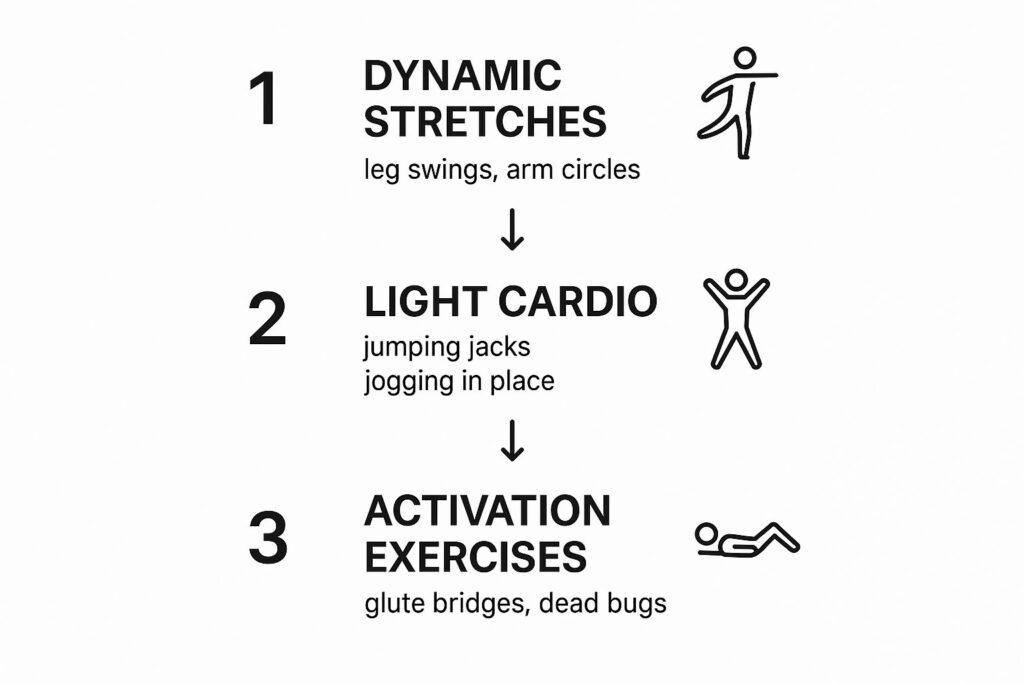
You don’t need a complicated program as a beginner. In fact, simple tends to work better in the early months because it’s easier to stay consistent with and easier to track progress on.
A few things worth knowing: most evidence suggests training each muscle group roughly twice a week produces better results than training it once. So rather than doing an entire day dedicated to arms and never coming back to them until next week, a structure where you’re working your whole body two or three times a week tends to serve beginners well. Full body workouts on three non consecutive days like Monday, Wednesday, Friday is one of the most time tested beginner approaches for exactly this reason.
For each session, you want to include exercises that cover the major movement patterns: a push like a push up or bench press, a pull like a row or lat pulldown, a squat pattern like a squat or leg press, and a hinge pattern like a deadlift or Romanian deadlift. You don’t need to do twenty exercises. Four to six compound movements done consistently and progressively will take you further than a crowded routine you can barely get through.
Sets and reps: somewhere in the range of three sets of eight to twelve reps per exercise is a solid starting point for muscle growth. That range isn’t magic, but it’s well supported and practical. The key is that the last few reps of each set should feel genuinely difficult. If you could easily do five more, the weight is probably too light to drive meaningful adaptation.
What You Eat Matters But Probably Not in the Way You Think
Nutrition gets overcomplicated in the fitness space, but for building muscle the core requirements are fairly straightforward. Your body needs two things to build muscle: enough protein to repair and grow muscle tissue, and enough total calories to support that process.
Protein is the one that most people underestimate. Research consistently points toward somewhere around 0.7 to 1 gram of protein per pound of bodyweight per day as a reasonable target for people trying to build muscle. For someone who weighs 160 pounds, that’s roughly 110 to 160 grams of protein a day. That’s more than most people are eating without paying attention to it, which is part of why so many people train consistently and see limited results.
The calorie side is more nuanced. You don’t need to eat massive amounts of food to build muscle the idea of eating everything in sight to “bulk up” is mostly outdated advice that results in gaining more fat than necessary. A modest caloric surplus, meaning just slightly more than your body burns in a day, is enough. Some beginners can actually build muscle while eating at maintenance or even a slight deficit, particularly if they have more body fat to start with because the body can use stored fat as energy while building muscle. This isn’t something everyone experiences, but it’s more common at the beginning than most fitness content suggests.
Beyond protein and total calories, the rest of nutrition detail matters far less in the early stages. Eating mostly whole foods, getting enough vegetables, staying hydrated these things support general health and recovery, and they matter. But spending hours counting every macro and micronutrient before you’ve established consistent training habits is getting ahead of the process.
Sleep and Recovery: The Part Most People Skip

There’s a common misconception that muscle gets built in the gym. It doesn’t. The gym is where you create the signal for your body to build muscle. The actual building happens during recovery primarily during sleep.
Growth hormone, which plays a meaningful role in muscle repair and growth, is released primarily during deep sleep. If you’re consistently getting five or six hours a night and then wondering why your progress has stalled, sleep is a legitimate variable worth looking at. Most research points toward seven to nine hours as the range where recovery is optimized for the average adult.
Beyond sleep, the concept of rest days matters more than most beginners expect. When you’re new to training and feeling motivated, it can feel counterintuitive to take a day off. But muscles grow during rest, not during training. Taking two or three rest days a week isn’t laziness it’s part of the process. Training the same muscles every single day without adequate recovery is one of the faster ways to stall your progress or end up with an overuse injury.
The Beginner Advantage (And Why It Doesn’t Last)
One thing worth knowing: the first few months of consistent training are genuinely unique. Your nervous system is learning new movement patterns, your body is responding to stimulus it hasn’t encountered before, and nearly any reasonable program will produce results. Researchers sometimes call this “newbie gains” the accelerated response that beginners experience before the body fully adapts to training.
This isn’t a reason to take shortcuts during that window. It’s actually a reason to establish good habits form, consistency, progressive effort while your body is most responsive. The people who make the most of this early phase tend to set themselves up well for the longer process that comes after. Once the initial adaptation period passes, progress slows down. That’s not a failure it’s just what training looks like beyond the beginner stage.
Knowing this up front also helps with managing expectations. If you start seeing results in the first couple of months and then things slow down, that’s not a sign something has gone wrong. It means you’ve moved past the easy phase into the normal phase of how to build muscle over the long term, which requires more patience and more attention to the details.
Form Before Weight, Always

This is worth saying plainly: learning to move correctly matters more than how much weight you’re lifting right now. Poor form doesn’t just increase injury risk it often means the muscles you’re trying to train aren’t actually doing the work. You can bench press with your shoulders doing most of the job instead of your chest. You can do rows with your lower back instead of your lats. The muscle doesn’t care about the name of the exercise it only responds when it’s actually being loaded.
Starting lighter than you think you need to, focusing on feeling the right muscles working, and building from there is not a slow approach. It’s actually the faster approach, because you’re building habits that scale. Plenty of beginner injuries come from loading up too fast before the movement patterns are solid.
A Closing Thought
Muscle building is one of those things where the fundamentals are genuinely simple and the process is genuinely slow. Most of the complexity you see in fitness content the advanced splits, the complicated periodization, the supplement stacks is aimed at people who have already been training for years and are trying to squeeze out small additional gains. As a beginner, you’re not at that stage yet, and none of that applies to you.
What applies to you right now is showing up consistently, lifting with real effort, eating enough protein, and sleeping enough to recover. If you do those things for long enough, the results aren’t a matter of if they’re mostly a matter of when.
thefitstate is not a medical resource. If you have an underlying health condition or injury, check with a doctor or physiotherapist before starting a new training program.