

 By
By TL;DR
Most beginners don’t quit because they’re lazy or clueless. Hell, most of us are actually trying pretty damn hard. We quit because we expect progress to be loud, fast, obvious, and motivating—and real progress is usually quiet, slow, awkward, and boring as shit. We confuse soreness with growth, motivation with commitment, and constant change with success. When things flatten out or get dull, we assume we screwed up, even when we’re quietly moving forward and just don’t know how to recognize it yet.
That First Gym Walk-In Kinda Sucks
In the beginning, everything screams at you.
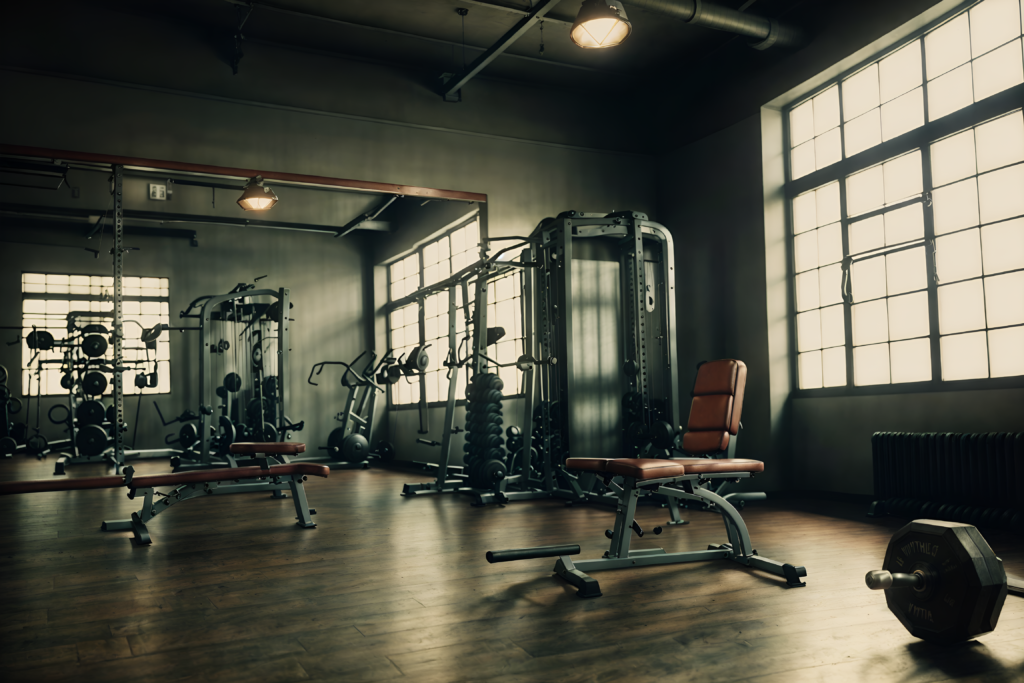
The smell hits first. Rubber mats, metal, old sweat baked into the walls like it’s part of the paint now. The clank of plates echoes way louder than it should. The floor’s cold through those cheap-ass shoes you bought because you didn’t want to “overinvest.” Mirrors everywhere. Bright. Unforgiving. Like they’re asking, you sure you belong here?
Every movement feels wrong. Your grip slips. Your stance feels off. You’re counting reps but forgetting numbers halfway through. Every single rep feels like effort. Real effort.
And then there’s the soreness.
The next morning you roll out of bed like you’re ninety years old. Quads screaming. Lower back tight. That weird pain behind the knees you didn’t know existed. Sitting down hurts. Standing up hurts. Laughing hurts. You waddle around work thinking, okay, yeah—this did something. This has to be progress.
I remember my first real gym phase—I lasted three weeks. Three. I was deadlifting 135, felt strong as hell about it, then stalled. Just… stopped. Same weight. Same struggle. Week four came, nothing moved, and I spiraled. Felt like garbage. Like the gym exposed me. I quit and told myself I “needed more time.”
That soreness? That’s usually the first lie we believe.
We think progress is supposed to announce itself. Pain, sweat pooling on the mat, lungs burning—proof. If we leave wrecked, we’re satisfied. If we leave feeling okay? Suspicious. Did that even count?
Early on, disruption feels productive. Anything that shakes the body feels like improvement. We don’t know the difference between stress and adaptation yet, so we treat them like the same thing.
And yeah, for a bit… that illusion works.

Progress Isn’t a Straight Line (Why We Freak Out Anyway)
Most of us don’t expect miracles. We’re not idiots. But we do expect momentum.
A clean upward slope. Nothing crazy. Just steady. A little stronger each week. A little leaner. Something visible. Something to point at and say, see—I’m not wasting my time.
Then progress slows. Or pauses. Or disappears like it took a lunch break and forgot to come back.
Mirror looks the same. Scale doesn’t budge. Some days you feel weaker, not stronger. Soreness fades—which somehow feels like losing progress instead of gaining recovery.
Is this even working?
Why the hell do I feel worse than last week?
Did I screw something up?
I used to stand in the locker room staring at my reflection after workouts, heart sinking, thinking, This is bullshit. Four weeks in and I still looked… normal. Same shoulders. Same gut. Same everything. I’d replay workouts in my head like game film, searching for mistakes.
No one prepares you for how nonlinear this is. How often progress stalls, reverses, or hides. We assume something’s wrong instead of realizing this messy, uneven crap is normal.
That’s usually where doubt starts digging in. Quietly. Patiently.
Why Soreness Lies to You
Here’s where we really screw ourselves.
As beginners, we believe effort equals results. Automatically. No questions asked.
If a workout leaves you shaking, gasping, borderline nauseous—boom, “good session.” If it feels controlled, calm, almost boring? Feels like a scam. Like you didn’t earn it.
So we chase soreness like it’s currency. Add more sets. More weight. Less rest. Sweat dripping onto the floor, heart pounding out of your chest. Validation.
I used to finish leg days so wrecked I had that post-squat waddle for two days. Couldn’t sit on the toilet without gripping the wall. I thought that meant I was killing it. Looking back—nah. I was just beating the hell out of myself with no plan.
Doing less feels irresponsible. Rest feels lazy. Ease feels wrong.
But effort is easy to feel. Results aren’t. Effort gives instant feedback. Results take time and don’t care how dramatic the workout looked.
So we keep turning the volume up, thinking louder means forward.
Motivation Ghosts You. Surprise.
At the start, motivation is everywhere.
You plan sessions. Watch videos at night. Lay in bed picturing your “future self.” The gym feels purposeful. Almost addictive.
Then one day… it doesn’t.
The gym’s just there. Same lights. Same smells. Same clank of plates. Another place you have to be after a long day. Motivation fades, not with drama, just a quiet meh.
And that little voice shows up. Do we really have to today?
This is where people panic.
We think motivation disappearing means we’re broken. Undisciplined. Soft. So we try to force the feeling back—new playlist, new program, new pre-workout—anything.
I remember sitting in my car outside the gym one night, engine running, hands on the wheel, just tired. Not sore. Not injured. Just tired of caring. I drove home. Didn’t quit forever, but I disappeared for a month.
No one tells you boredom is part of progress. That showing up without hype is actually the work.
So when motivation leaves, a lot of us leave with it.
Proof, Proof, Proof—We Need It Now
We want evidence.
Mirrors changing. Shirts fitting different. Someone saying, “hey, you look bigger.” Anything external to confirm this isn’t a waste of time.
So we check. Constantly.
Gym mirrors. Bathroom mirrors. Phone cameras. Car windows at night. Flex. Unflex. Tilt. Compare angles. Try to remember how we looked last week.
It feels responsible. Like tracking progress.
But really? It’s just feeding impatience.
Physical change is usually the last thing to show up. Strength. Coordination. Tolerance for discomfort. Consistency. All that grows quietly, under the surface. Doesn’t show up in reflections.
So we miss the early wins because we’re only looking where change is slowest.

The Mental Load Nobody Warned Us About
Beginner fatigue isn’t just sore muscles. It’s mental.
Thinking about food all day. Planning workouts. Remembering cues. Wondering if your form sucks. Feeling watched. Feeling behind. Feeling like everyone knows you’re new.
That constant low-level thinking is exhausting.
But because it doesn’t feel like work, we ignore it. Assume if we’re tired or cranky, we’re weak. So we push harder instead of backing off mentally.
I used to overthink every session. Replay reps in my head at night. Google form videos at 1 a.m. Wake up tired before I even touched a weight.
Eventually, that weight builds. The gym doesn’t hurt—it just feels heavy. And instead of adjusting expectations, we blame ourselves.
Comparison Will Wreck You Fast
You know when you’re resting between sets and you watch someone load plates like it’s nothing? No hesitation. No checking their phone. Just… confidence.
Yeah. That.
We tell ourselves we’re not comparing, but we are. Quietly. Constantly.
We forget how long those people have been training. Forget their quits, restarts, screw-ups. We only see the finished version.
Social media pours gasoline on it. Progress timelines squashed into seconds. Struggle edited out. Plateaus deleted.
We compare our messy, inconsistent, real-life experience to something that was never meant to be real.
And then we wonder why we feel behind.
Doing Everything “Right”… Still Wanting to Quit

Most people don’t quit because they failed.
They quit because the story they believed about progress stops matching reality.
They’re showing up. Training. Eating better than before. But the rewards they expected aren’t coming fast enough.
Guilt creeps in. Missed sessions feel heavier than they should. One bad week turns into what’s the point?
Overthinking kicks up again. New routine. New split. New plan. Fix, fix, fix. Anything but sitting with slow change.
Quitting rarely feels like a decision. It feels like relief.
Coming Back Hits Different
When we restart—and most of us do—it’s not the same.
We’re weaker than we thought. Soreness comes back like an insult. The excitement’s muted. We’re more cautious. More aware of how easy it is to fall off.
At first, that sucks.
Then something shifts.
We start recognizing patterns. See how impatience burned us. How guilt didn’t help. How going all-in made everything fragile as hell.
Progress gets less dramatic. More durable.

Progress Doesn’t Announce Itself Anymore
At some point, progress stops making noise.
No soreness trophies. No hype. You finish the workout, wipe the sweat off your face, and it just feels… done. Grab your bag. Walk out. That’s it.
That used to mess with my head. I’d think, Shouldn’t this feel like more? Like if it didn’t hurt or excite me, it must not be working. I’d sit in the car, shaker leaking, staring at nothing, trying to decide if this was growth or just routine.
Some days I still wonder.
The mirrors haven’t gotten friendlier. The floor’s still cold in the morning. There are weeks where nothing changes and the urge to shake the whole thing creeps back in.
The difference is I don’t panic anymore. I don’t disappear. I show up, do the work, leave.
Progress isn’t a feeling. It’s not motivation. It’s staying when you want proof—and not getting it.
Still going anyway.