

 By
By TL;DR
Protein is the raw material your muscles use to repair and grow after exercise, but it only works alongside a consistent training stimulus both matter. The general research backed range sits somewhere between 0.7 and 1 gram of protein per pound of bodyweight per day, though the exact number depends on your training intensity and goals. Hitting that number consistently matters more than obsessing over specific foods or timing. Eating more than that range doesn’t appear to produce meaningfully better results for most people. The timing of protein before or after a workout matters less than people think compared to simply getting enough of it overall.
Why Protein Actually Matters
When people ask about how much protein per day they need, they’re usually asking because they’ve heard it’s important and don’t know whether they’re getting enough. That’s a fair place to start. Protein isn’t just one thing it’s made up of amino acids, and those amino acids are what your body pulls from to rebuild muscle tissue after you’ve broken it down in a workout. Without adequate protein, that rebuilding process becomes significantly less effective, even if the training itself is consistent.
This isn’t gymbro mythology. Muscle protein synthesis the process by which your body builds and repairs muscle depends on two things working together: a training stimulus that signals the muscles to adapt, and enough amino acids available for the body to actually carry out that adaptation. Training provides the signal. Protein provides the material. Neither one alone is enough to get the full response.
What makes this slightly more nuanced is that protein also serves other functions in the body immune function, enzymes, hormones, and so on. Your body will prioritize those if it needs to. This is part of why someone eating very little protein might find that their muscle building progress stalls, even when they’re training consistently. The body isn’t ignoring the training signal it’s just working with limited resources.
What the Numbers Actually Look Like

The most commonly cited research backed recommendation for people who are actively training lands between 0.7 and 1 gram of protein per pound of bodyweight. So if you weigh 160 pounds and you’re lifting weights a few times a week, somewhere between 112 and 160 grams of protein per day is the range most evidence points toward.
That number probably sounds like a lot if you’ve never tracked protein before. For most people eating a typical diet without paying attention, it is. A chicken breast has roughly 3035 grams. Two eggs have about 12. A cup of Greek yogurt might have 1520 depending on the brand. You can get there, but it does require some degree of intentionality, especially early on when you’re still learning what your food actually contains.
The lower end of that range around 0.7 grams per pound seems to be sufficient for most recreational lifters training 34 times a week. The higher end becomes more relevant for people training at high volume or in a calorie deficit, where the body is under more stress and may start using some dietary protein for energy rather than muscle repair.
One thing worth knowing: eating significantly more than 1 gram per pound doesn’t appear to produce meaningfully better muscle building results for most people. There is a ceiling to how much muscle protein synthesis a single meal can drive somewhere in the range of 2040 grams of high quality protein tends to be what most research points to as the effective dose per sitting, though this varies by body size and protein source. That said, total daily intake still matters more than any individual meal. Spreading adequate protein across your day is more useful than front loading it all at once. More protein than your body needs isn’t harmful for healthy people, but it’s not a lever that keeps producing returns indefinitely.
The Sources Matter A Little
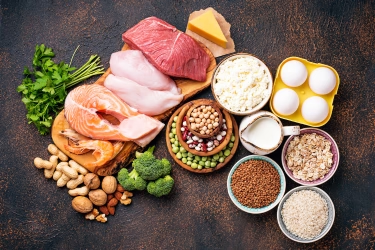
There’s a lot of noise around protein sources animal vs. plant, whole food vs. powder, complete vs. incomplete proteins. The differences are real, but they’re probably less critical than people make them sound, particularly once you understand the basics.
Animal proteins chicken, beef, eggs, fish, dairy tend to contain all the essential amino acids your body can’t produce on its own, and they’re generally well absorbed. Plant proteins are often lower in one or more essential amino acids and can be slightly less digestible, which is why variety matters more if most of your protein comes from plant sources. Eating a wide range of plant based proteins across the day largely compensates for what any single source might lack.
Protein powder is a concentrated, convenient source and nothing more. It’s not magic, not dangerous, and not necessary. If your diet makes it genuinely difficult to hit your protein targets through whole foods which is a real constraint for some people a protein shake is a practical solution. But it’s a tool, not a requirement. For most people in most situations, total daily intake and variety of sources matter far more than precisely which proteins they choose.
How Much Protein Per Day If You’re Not Training
This part gets overlooked. The ranges above apply specifically to people who are actively doing resistance training. If you’re not training, your protein needs are considerably lower.
The recommended dietary allowance the RDA for sedentary adults sits around 0.36 grams per pound of bodyweight. It’s worth being clear about what that number actually represents: it’s a minimum set to prevent deficiency in most of the population, not a target for muscle growth or performance. For a 160 pound person who doesn’t exercise, that works out to roughly 58 grams per day enough to keep basic body functions running, but not designed with building or preserving muscle as a goal.
This is why context matters when someone throws a protein number at you without asking about your situation. If you’re here because you want to build muscle and you’re actively lifting, the RDA isn’t the relevant benchmark. But understanding what it actually represents helps explain why recommendations shift so significantly once training enters the picture.
The Timing Question

At some point, someone probably told you that you need to eat protein within 30 minutes of finishing your workout the so called “anabolic window.” This was treated as near gospel in fitness circles for a long time. The actual research on it is considerably more nuanced.
Muscle protein synthesis is elevated after training, and protein intake during that window does support recovery. But for most people, that window is much wider than 30 minutes probably a few hours and if you ate a protein containing meal before your session, those amino acids are still circulating during and after your workout anyway. In practical terms, timing matters far less than total daily intake for the majority of people following a normal eating schedule.
That said, it’s not entirely irrelevant. If you’re training in a fully fasted state, or you’re an advanced athlete optimizing for every marginal gain, the timing of protein intake may carry slightly more weight. For someone building foundational habits around training and nutrition, though, it’s genuinely one of the last things worth worrying about.
Making It Sustainable
The harder part of protein intake for most people isn’t the knowledge it’s the consistency. Knowing you need 130 grams of protein per day is one thing. Actually building eating patterns that reliably deliver that number, without making every meal feel like a math problem, takes time and repetition.
A reasonable starting point is to identify three or four protein sources you actually enjoy and get a rough sense of how much protein a realistic serving of each provides. Once those numbers are in your head, you don’t need to track meticulously every day. You can build meals around them and develop an intuitive sense of where you land by the end of the day.
Breakfast is often where people fall short. A lot of traditional breakfast foods are low in protein, so adding something like eggs, Greek yogurt, or cottage cheese to your morning can change your daily total significantly. Lunch and dinner tend to be easier, since most main dishes are already built around some form of protein.
Closing Thought

Protein probably deserves more attention than most people give it, and less anxiety than the fitness industry tends to create around it. The numbers aren’t complicated once you’ve sat with them for a bit. Knowing how much protein per day your body actually needs given your weight, your goals, and how you’re training is one of those pieces of information that quietly makes a lot of other things click into place. Most people, once they start paying even loose attention to it, find they can hit reasonable targets without much suffering. It just takes a few weeks of learning which foods work for you and building from there.